

A Brighter Smile Starts Here: What You Need to Know About Cosmetic Teeth Whitening
Cosmetic teeth whitening is a safe, non-invasive dental treatment that uses peroxide-based bleaching agents to lighten the color of your teeth — removing stains and discoloration caused by food, drinks, tobacco, aging, or medications.
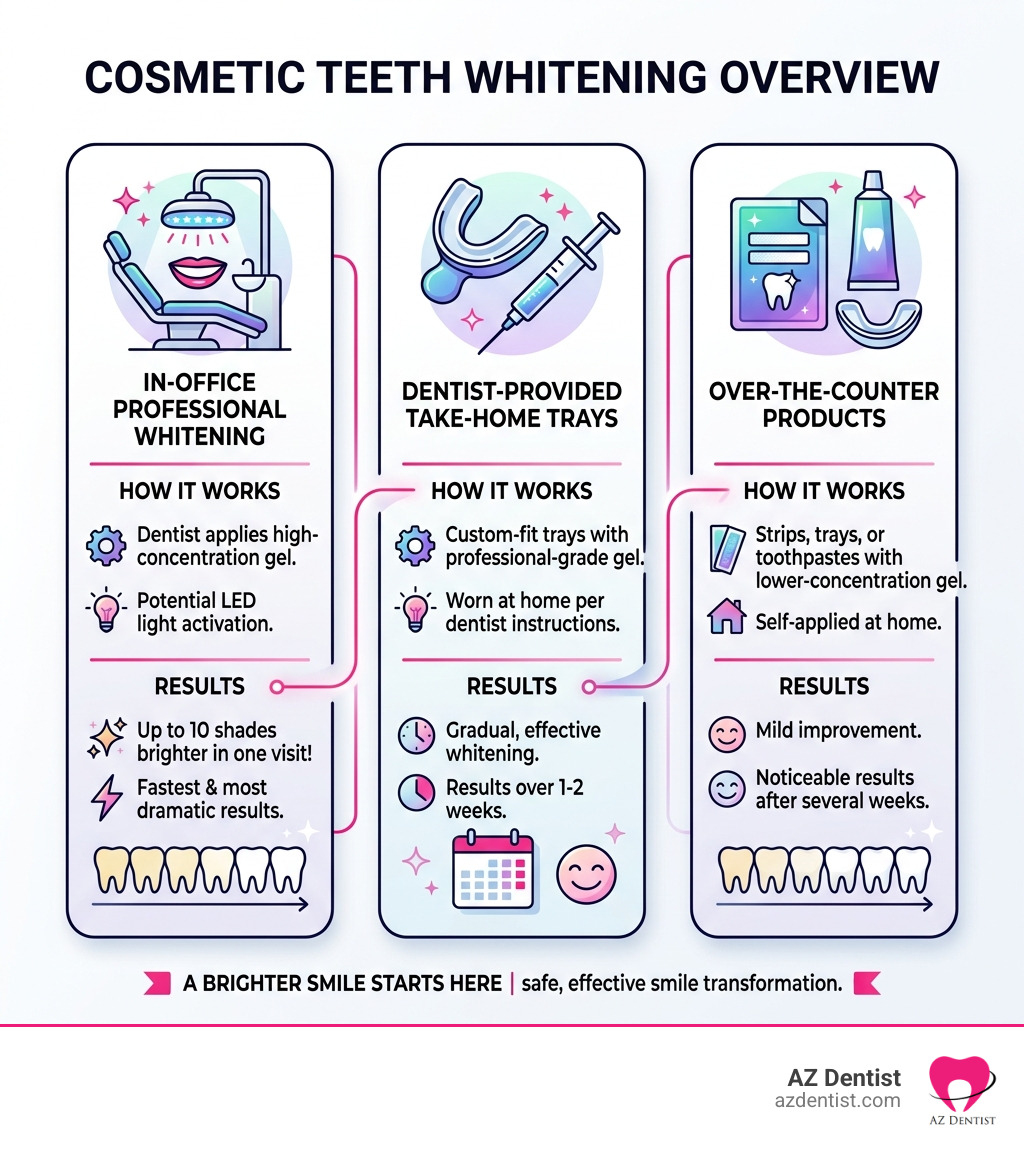
Here’s a quick overview of your main options:
| Method | How It Works | Results |
|---|---|---|
| In-office professional whitening | Dentist applies high-concentration gel, often with LED light | Up to 10 shades brighter in one visit |
| Dentist-provided take-home trays | Custom trays with professional-grade gel worn at home | Gradual results over 1-2 weeks |
| Over-the-counter products | Strips, trays, or toothpastes with lower-concentration gel | Mild improvement over several weeks |
It’s no surprise this is one of the most requested cosmetic dental treatments. According to the American Association of Orthodontists, nearly 90% of patients ask about tooth whitening. And when people are asked what they’d most like to change about their smile, the answer is almost always: whiter teeth.
But with so many products and treatments available — from drugstore strips to in-office laser sessions — it can be hard to know what actually works, what’s safe, and what’s right for you.
That’s exactly what this guide covers.
I’m Dr. Janne Lynch, and I’ve spent my career focused on cosmetic teeth whitening and smile transformation at AZ Dentist Scottsdale, drawing on extensive training at the Larry Rosenthal Institute for Aesthetic Dentistry at NYU and years of hands-on cosmetic dental practice. I want to help you feel confident — not confused — about your whitening options.
Cosmetic teeth whitening terms explained:
Understanding How Cosmetic Teeth Whitening Works
To understand how we get your teeth to sparkle, we first have to look at the anatomy of a tooth. Your teeth aren’t solid, impenetrable blocks; your enamel is actually made of microscopic crystalline rods. Over time, organic compounds from the things we eat and drink get trapped within these structures.
Cosmetic teeth whitening works by using active ingredients—specifically hydrogen peroxide or carbamide peroxide—to penetrate the enamel. When these peroxides break down, they release oxygen molecules. These molecules enter the enamel and dentin (the layer under the enamel) and break the chemical bonds of the “chromogens” (stain-causing particles). By breaking these stains into smaller pieces, the color becomes less concentrated, and your teeth appear significantly brighter.
According to the American Dental Association (ADA), hydrogen peroxide is the more potent agent and works quickly, often diffusing to the tooth pulp within 15 minutes. Carbamide peroxide, on the other hand, breaks down into hydrogen peroxide at a ratio of about 3:1. It works more slowly, making it a popular choice for overnight at-home treatments.
Extrinsic vs. Intrinsic Stains
Not all stains are created equal. When we talk about stained teeth, we generally categorize them into two groups:
- Extrinsic Stains: These are surface stains found on the outer layer of the tooth (enamel). They are usually caused by lifestyle habits like smoking or drinking coffee, tea, and red wine. Because these stains are on the surface, they typically respond very well to cosmetic teeth whitening.
- Intrinsic Stains: These are stains located deep within the inner structure of the tooth (the dentin). These can be much trickier to treat. They are often caused by:
- Aging: As we get older, enamel thins, revealing the naturally yellowish dentin underneath.
- Medications: Certain antibiotics, like tetracycline, can cause deep tetracycline staining if taken during tooth development in childhood.
- Trauma: If a tooth is injured, it may lay down more dentin as a protective measure, which can make the tooth look darker.
- Excessive Fluoride: High levels of fluoride during childhood can lead to white spots or brown fluorosis stains.
While extrinsic stains are the “low-hanging fruit” of whitening, many intrinsic stains can still be improved with professional-grade treatments and extended wear times.
Professional vs. At-Home Cosmetic Teeth Whitening Options
When you decide it’s time for a brighter smile, you’re faced with a choice: do it yourself or see a professional? At AZ Dentist Scottsdale and AZ Dentist Glendale, we see patients every day who have tried the “drugstore route” with mixed results.
Here is a breakdown of the primary methods available in April 2026:
In-Office Professional Whitening
This is the “gold standard” for speed and efficacy. During a session at one of our offices, such as AZ Dentist Glendale, we apply a high-concentration peroxide gel (often between 25% to 40% hydrogen peroxide). We often use specialized LED lights to accelerate the bleaching process. Brands like Philips Zoom!—the #1 patient-requested professional brand—can lighten teeth by up to 8 shades in less than an hour. Clinical studies from Glo Science suggest some systems can even reach 10 shades in a single session.
Professional Take-Home Kits
If you prefer to whiten in the comfort of your own home but want better results than a box from the pharmacy, professional teeth whitening kits are the answer. We take an impression of your teeth to create custom-fitted trays. These trays ensure the gel stays in contact with your teeth and away from your sensitive gums. Popular brands like Opalescence, which has brightened over 150 million smiles, offer various strengths to suit your schedule.
Over-the-Counter (OTC) Products
These include whitening strips, “boil-and-bite” trays, and toothpastes. While affordable, they have the lowest concentration of whitening agents. They are best suited for minor touch-ups or maintaining a smile that has already been professionally whitened.
Comparison Table: Professional vs. OTC
| Feature | In-Office (Professional) | Custom Trays (Professional) | OTC Strips/Trays |
|---|---|---|---|
| Concentration | Very High (Fast acting) | Medium to High | Low |
| Application | Dentist-applied | Custom-fit (Self-applied) | One-size-fits-all |
| Time to Results | ~60 minutes | 1-2 weeks | 2-4 weeks |
| Safety | Maximum (Gum protection) | High (Custom fit) | Moderate (Gel seepage) |
| Effectiveness | Most effective | Highly effective | Mild |
The Benefits of Professional Cosmetic Teeth Whitening
Why do so many people choose the professional route? It comes down to three things: safety, speed, and supervision.
When you choose professional whitening at AZ Dentist, you aren’t just getting a stronger gel. You’re getting a clinical exam first. I always check for underlying issues like cavities or gum disease before we start. Applying whitening chemicals to a tooth with a cavity is a recipe for extreme pain!
Furthermore, we provide superior gum protection. In-office treatments use a “rubber dam” or a light-cured resin barrier to shield your soft tissues from the bleaching agent. This significantly reduces the risk of chemical burns or irritation that often happens with ill-fitting OTC trays.
Safety, Risks, and Candidate Suitability
Is cosmetic teeth whitening safe? The short answer is yes—when done correctly. However, it is a chemical process, and there are some things you should know.
Common Side Effects
The most frequent side effect is temporary tooth sensitivity. This happens because the peroxide opens the microscopic pores in your enamel to reach the stains, which can temporarily irritate the nerves inside the tooth. Most of the time, this “zinging” sensation lasts only 24 to 48 hours. Using a sensitivity-relief toothpaste (like those containing potassium nitrate) before and after treatment can help.
Gum irritation is another common risk, usually caused by the whitening gel coming into contact with the soft tissues. This is why custom-fitted trays or professional application are so important for whitening without damage.
Who is a Good Candidate?
Most adults with healthy teeth and gums are great candidates for whitening. However, we generally advise against it for:
- Pregnant or nursing women: While there is no definitive proof of harm, most dental associations recommend waiting as a precaution.
- Children under 16: Their tooth pulps are larger and more sensitive.
- People with restorations: This is a big one. Whitening agents do not change the color of crowns, veneers, or composite fillings. If you whiten your natural teeth, your restorations will stay the same color, leading to what we call “technicolor teeth.” If you are planning to get new dental work, I always recommend whitening your natural teeth first, then matching the restoration to your new, brighter shade.
The ADA recommends consulting with your dentist before starting any whitening regimen to ensure your mouth is healthy enough for the process. Whether you visit us at AZ Dentist Sun City or AZ Dentist Sedona, we’ll make sure your enamel is in good shape before we begin.
Costs, Results, and Long-Term Maintenance
One of the most common questions I hear is: “How long will this last?”
Typically, cosmetic teeth whitening results last anywhere from 6 months to 3 years. The wide range is due entirely to your lifestyle habits. If you are a heavy coffee drinker or a smoker, you’ll see those stains return much faster than someone who avoids dark-colored foods.
Nationwide, the average cost for in-office whitening is around $650, though it can range from $500 to $1,000 depending on the technology used. Professional take-home kits usually fall between $100 and $400. While the upfront cost is higher than OTC products, the results are significantly more dramatic and often more cost-effective in the long run because you need fewer applications to reach your goal.
For those looking for Scottsdale whitening, we provide various options to fit different budgets and goals, ensuring you get the most value out of your investment.
Maintaining Your Cosmetic Teeth Whitening Results
Once you have that “smile of a lifetime,” you’ll want to keep it. Here are my top professional tips for maintenance:
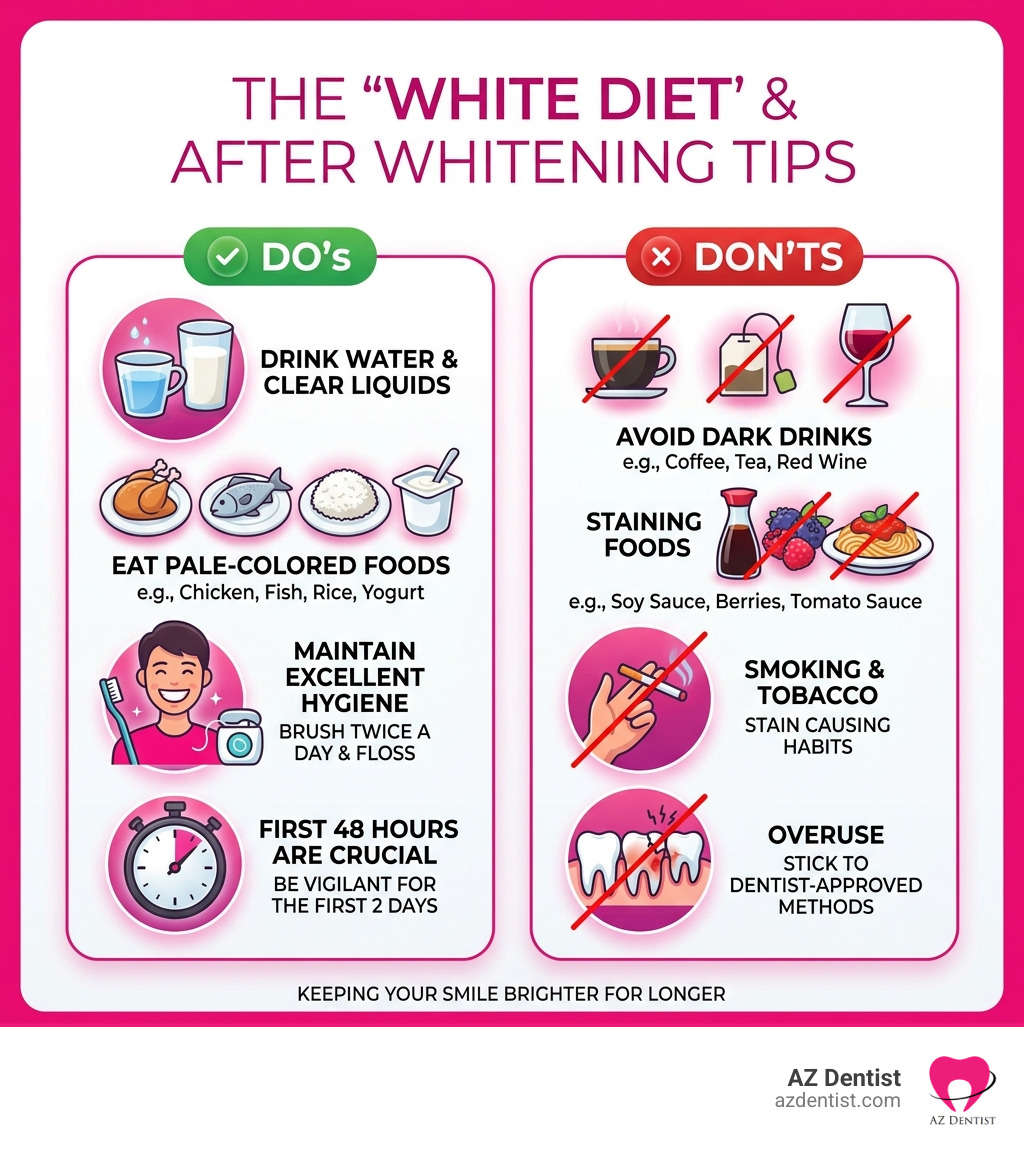
- The “White Diet”: For the first 48 hours after a professional treatment, your enamel pores are still slightly open. Avoid “staining” foods like soy sauce, red wine, blueberries, and coffee.
- Use a Straw: If you can’t give up your iced coffee or tea, drink it through a straw to bypass your front teeth.
- Rinse After Eating: If you consume something acidic or dark-colored, rinse your mouth with water immediately after.
- Top-Notch Hygiene: Brush twice a day and floss daily. Removing plaque prevents new stains from having a place to “stick.”
- Touch-Ups: Most patients benefit from a “touch-up” every 6 to 12 months. We offer home whitening tips to help you use your custom trays effectively for maintenance.
Frequently Asked Questions about Whitening
Can whitening damage my natural enamel?
When used as directed, professional whitening does not “eat away” or permanently damage your enamel. The process involves a temporary opening of the enamel structure to reach stains. However, overuse of high-concentration gels or using abrasive DIY methods (like charcoal or lemon juice) can cause permanent damage. Always stick to dentist-approved methods.
Why don’t my crowns or veneers change color?
Whitening agents are designed to work on the porous structure of natural tooth enamel. Materials like porcelain (used in crowns and veneers) and composite resin are non-porous and do not react to peroxide. If your natural teeth are stained, the crown might look whiter; if you whiten your natural teeth, the crown will eventually look darker by comparison.
How often can I safely whiten my teeth?
For most people, a full whitening treatment once a year, combined with occasional touch-ups, is perfectly safe. Over-whitening can lead to a translucent, “blue-grey” appearance that looks unnatural and can cause chronic sensitivity.
Conclusion
At AZ Dentist, we believe everyone deserves to feel proud of their smile. Whether you visit us at our Scottsdale, Glendale, Sedona, Sun City, or Phoenix locations, our goal is to provide a comfortable, compassionate experience. We don’t just want to whiten your teeth; we want to help you achieve the “smile of a lifetime.”
I’m Dr. Janne Lynch, and I invite you to stop hiding your smile. From addressing deep intrinsic stains to providing a quick brighten-up before a big event, we have the tools and expertise to help you glow.
Ready to see what’s possible? Schedule your professional teeth whitening consultation with us today and take the first step toward a brighter, more confident you!