

Why Choosing the Right Dentures Cleaners Matters More Than You Think
Dentures cleaners are products or devices used to remove plaque, bacteria, stains, and food debris from removable dentures — keeping both your prosthetic and your mouth healthy.
Here’s a quick look at the most common types:
| Type | How It Works | Best For |
|---|---|---|
| Effervescent tablets | Dissolve in water to create a chemical soak | Everyday deep cleaning |
| Liquid soaks | Ready-to-use solution that penetrates pores | Gentle daily disinfection |
| Ultrasonic cleaners | Sound waves create bubbles that dislodge debris | Hands-free thorough cleaning |
| UV-C devices | Germicidal light destroys bacteria DNA | Sterilization boost |
| Denture pastes/foams | Applied by brush or worn in the mouth | Quick on-the-go cleaning |
Most dental professionals agree: combining mechanical cleaning (brushing) with chemical soaking gives you the best results. No single method does it all.
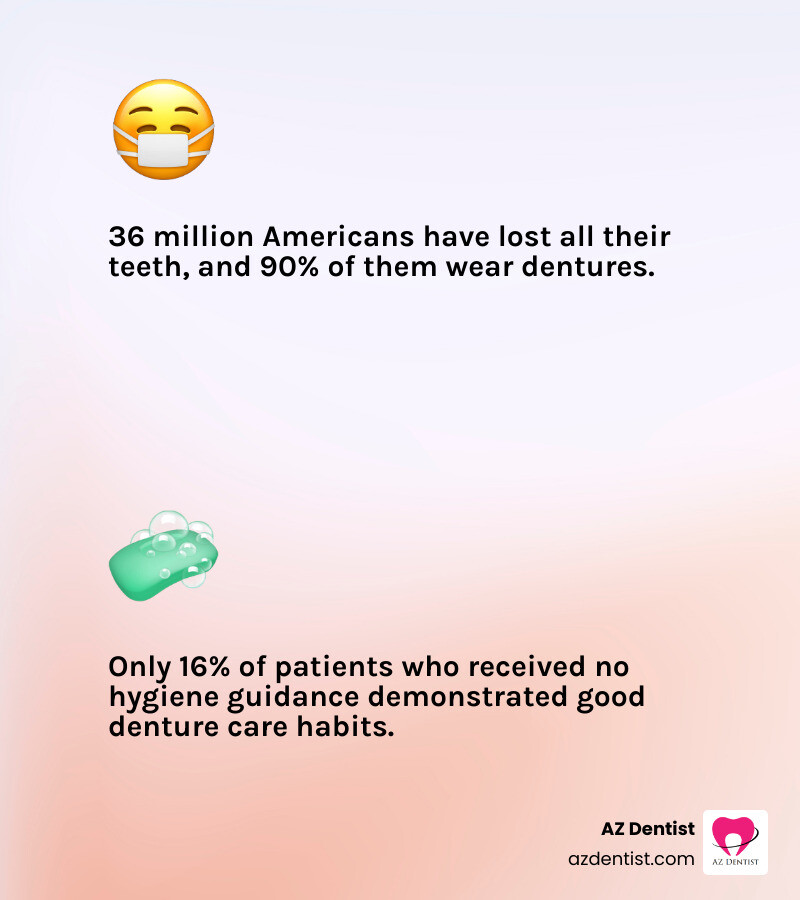
More than 36 million Americans have lost all of their teeth, and around 90% of them wear dentures. Yet most denture wearers don’t clean their prosthetics properly — often because no one ever showed them how. In fact, research shows that only 16% of patients who received no hygiene guidance demonstrated good denture care habits. Poor cleaning isn’t just a cosmetic issue. It leads to painful oral infections, bad breath, and can even affect your overall health.
I’m Dr. Janne Lynch, and at AZ Dentist Scottsdale I’ve spent years helping patients understand that proper denture hygiene is just as important as the prosthetic itself — the right dentures cleaners make a real difference in both comfort and long-term oral health. In this guide, I’ll walk you through everything you need to know to choose and use the best cleaner for your specific dentures.
Understanding the Different Types of Dentures Cleaners
When you look for dentures cleaners today, you will find three main categories: chemical, mechanical, and ultrasonic. Each plays a distinct role in keeping your oral prosthetics pristine. Using only one method is rarely enough. For example, while chemical soaking solutions can sanitize your dentures, they lack the physical movement required to lift away dead bacteria and stubborn food particles.
Conversely, relying solely on mechanical brushing might miss the microscopic pores inherent to denture materials. In our clinics, we always recommend a hybrid approach. And a quick word of warning: while household dishwashing liquid is a popular, budget-friendly DIY option for handwashing, it will not provide the targeted antimicrobial protection of specialized cleaners—and it might leave your morning coffee tasting like lemon-fresh soap!
For a high-tech approach to home care, advanced devices like the Denture CleanPro™ – Tavost combine high-frequency sound waves with ultraviolet light. This dual-action technology offers a clinical-grade clean that removes up to 99.99% of lingering pathogens without relying entirely on harsh chemical additives.
Chemical Dentures Cleaners and Key Ingredients
Chemical cleansers rely on active ingredients to break down biofilm, lift stains, and kill odor-causing pathogens. Understanding what goes into these solutions can help you select a formula that is safe for your specific type of denture:
- Alkaline Peroxides: These are the most common ingredients in effervescent (fizzy) tablets. When dissolved in water, they release small oxygen bubbles that mechanically help loosen light debris while whitening stains.
- Sodium Hypochlorite (Dilute Bleach): Clinical studies show that immersing acrylic dentures in a 0.5% sodium hypochlorite solution for just 3 minutes is highly effective at reducing microbial counts without causing surface roughness. However, bleach-based cleaners will tarnish and corrode metal alloys.
- Enzymes: Some premium formulas contain specialized enzymes (like proteases or amylases) that specifically target and break down the protein matrix of dental plaque.
- Persulfates: Many traditional drugstore tablets use persulfates as oxidizing agents. Because some individuals experience allergic reactions to persulfates, the market has shifted toward modern, persulfate-free alternatives.
If you are looking for a gentle yet incredibly thorough soak, a liquid-based formula like the Liquid Crystal Soak Cleanser – Deep Clean Retainers and Dentures – Dr. B Dental Solutions is an excellent choice. Unlike fizzy tablets that use harsh effervescent chemicals that can dry out soft liners or degrade the rubber O-rings on snap-in overdentures over time, this non-abrasive liquid soak penetrates microscopic pores safely.
Mechanical and Ultrasonic Dentures Cleaners
Mechanical cleaning involves physically scrubbing the denture using a soft-bristled brush. However, manual brushing can easily miss microscopic grooves. This is where ultrasonic technology steps in.
Ultrasonic denture cleaners work through a process called cavitation. The machine generates high-frequency sound waves (typically between 40 kHz and 52 kHz) through water. These sound waves create millions of microscopic bubbles that rapidly expand and collapse. When they collapse, they release tiny bursts of energy that safely blast away plaque, calculus, and food particles from the hard-to-reach crevices of your prosthetic.
Modern units also integrate UV-C sterilization. While the ultrasonic waves physically clean the surface, the germicidal UV-C light destroys the DNA and RNA of remaining bacteria, viruses, and fungi, preventing them from reproducing.
Excellent examples of this technology include the DentureCleanse® Ultrasonic & UV Cleaner for Dentures, which offers convenient standard and deep-cleaning modes, and the cordless Denturexi Ultrasonic Denture Cleaner, which operates at an optimized 52kHz frequency to protect delicate medical-grade plastics while delivering hospital-grade sanitization.
Material Compatibility and Safe Daily Cleaning Routines
Not all dentures are made of the same materials, which means a cleaner that works perfectly for one person might destroy the prosthetic of another.
- Acrylic (PMMA): Heat-cured polymethylmethacrylate is the most common denture base. It is naturally porous, meaning it easily harbors plaque. It is also easily scratched. Any scratch deeper than 0.20 micrometers (μm) acts as a microscopic harbor for bacteria and fungi.
- Cobalt-Chromium Alloys: Often used for the framework of partial dentures. These metals are highly susceptible to corrosion and tarnishing if exposed to chlorine- or bleach-based chemical cleaners.
- Flexible Thermoplastic Resins: These comfortable, metal-free partials require specialty, non-abrasive oxidants. Using standard harsh chemicals can warp the material and instantly void your manufacturer’s warranty.
- Soft or Resilient Liners: Often used to cushion dentures for sensitive gums. These liners are highly delicate, prone to drying out, and can be easily degraded by bubbling effervescent tablets.
To help you protect your investment, we have compiled a quick compatibility guide:
| Denture Material | Recommended Cleaning Method | Products/Ingredients to Avoid |
|---|---|---|
| Acrylic (PMMA) | Soft brush with mild soap; daily mild peroxide or liquid soak; ultrasonic baths | Abrasive toothpastes; boiling water; prolonged bleach exposure |
| Metal Frameworks | Non-chlorinated effervescent tablets; soft brush; ultrasonic baths | Bleach or sodium hypochlorite (causes corrosion/tarnish) |
| Flexible Thermoplastics | Manufacturer-approved flexible denture cleansers; silicone-bristled brushes | Standard abrasive brushes; harsh drugstore tablets |
| Soft/Resilient Liners | Gentle liquid soaks; extra-soft brushes | Effervescent tablets (dries out and degrades the liner) |
Establishing a safe, structured daily routine is key to maintaining both your prosthetic and your oral health.
Here is the step-by-step sequence we recommend to our patients:
- Rinse After Eating: Remove your dentures after meals and run them under cool or warm water to wash away loose food particles. Place a towel in the sink first to cushion any accidental drops!
- Brush Daily: Use a soft-bristled toothbrush or a specialized denture brush with a non-abrasive cleanser (like mild dish soap or a dedicated denture paste). Gently brush all surfaces, paying close attention to the grooves that sit against your gums to remove residual adhesive.
- Soak Overnight: Never let your dentures dry out, as they will warp and lose their shape. Submerge them in water or a mild soaking solution overnight.
- Rinse Thoroughly Before Wearing: This is a crucial safety step. Denture soaking solutions contain strong chemicals that can cause chemical burns, pain, or vomiting if swallowed. Always rinse your dentures under running water for at least 30 seconds before placing them back in your mouth.
- Maintain Your Oral Hygiene: After removing your dentures, use a soft toothbrush or damp gauze to clean your gums, tongue, cheeks, and the roof of your mouth.
For more tailored advice on choosing prosthetics, you can read our detailed guide on dentures for seniors or explore our comprehensive guide to implant supported partial dentures to find a stable, life-changing solution.
What to Avoid and the Risks of Poor Denture Hygiene
Knowing what not to do is just as important as knowing the proper cleaning steps. Many common household products can permanently damage your prosthetics:
- Abrasive Toothpastes: Regular toothpastes contain abrasive silica particles designed to clean hard natural enamel. On acrylic dentures, these particles act like sandpaper, leaving micro-scratches that attract stain-causing pigments and bacteria.
- Bleach and Chlorine: While excellent for sanitizing pure acrylic, bleach will corrode the metal clasps and frameworks of partial dentures, causing them to weaken and snap.
- Hot or Boiling Water: Never use hot water to clean or soak your dentures. High temperatures warp the acrylic, meaning your dentures will no longer fit comfortably or securely.
Neglecting your denture hygiene doesn’t just ruin your smile; it carries serious health risks. The most common complication is denture stomatitis (also known as denture sore mouth). This painful inflammation of the gums is primarily caused by an overgrowth of Candida albicans, a fungal pathogen that thrives in the warm, moist, uncleaned environment of a denture base.
Furthermore, uncleaned dentures act as a reservoir for systemic pathogens. Bacterial biofilm can enter your bloodstream through microscopic cuts in irritated gums, contributing to systemic issues like digestive problems, respiratory infections, and increased cardiovascular inflammation. If you are tired of dealing with loose, uncomfortable, or hard-to-clean traditional dentures, consider reading our complete guide to implant retained dentures to see if a permanent, secure alternative is right for you.
Frequently Asked Questions about Denture Cleaners
We receive many questions from patients across our Arizona locations about how to navigate the massive selection of denture care products on the market. Here are our clinical recommendations for the most common concerns.
Are ultrasonic denture cleaners worth the investment compared to soaking tablets?
Yes, ultrasonic cleaners are absolutely worth the investment for most patients. While a box of effervescent tablets is inexpensive upfront, the lifetime cost of buying tablets adds up. An ultrasonic cleaner is a one-time purchase that provides a level of physical cleaning that chemical tablets simply cannot match.
By using high-frequency waves (ranging from 45kHz to 52kHz), devices like the Retainer & Denture Cleaning Pod | GuruNanda use cavitation to lift away plaque and microscopic debris without scratching the denture surface. It is a faster, hands-free, and highly effective way to keep your prosthetics feeling smooth and looking brand new.
Can denture cleaners be used on other dental appliances like retainers or aligners?
Generally, yes. Most non-abrasive denture cleaners are perfectly safe for orthodontic retainers, clear aligners, nightguards, and sports mouthguards. However, because clear aligners are made of thin, highly sensitive thermoplastic resins, you must avoid using hot water or harsh, heavily pigmented soaking tablets that could cloud or stain the plastic.
For quick, on-the-go freshening without the need for a soaking cup, wearable foaming cleansers like FreshDent are highly popular. Formulated with a gentle 3.8% hydrogen peroxide solution, it sanitizes your appliance and freshens your breath while you wear it, without causing tooth or gum sensitivity.
How should I clean implant-supported or partial dentures with metal clasps?
If your denture has metal clasps or sits on implant attachments (like snap-in overdentures), you must be incredibly careful with your choice of dentures cleaners. Avoid any products containing chlorine or bleach, as these will corrode the metal elements and ruin the precise fit. Instead, stick to mild, non-chlorinated effervescent tablets, gentle liquid soaks, and soft-bristled brushes.
It is also vital to protect the delicate rubber O-rings inside snap-in dentures, which can dry out and crack if exposed to harsh chemical fizzing agents. For more detailed instructions on maintaining partial prosthetics, read our partial dentures sun city complete guide.
Conclusion
Finding the right dentures cleaners and establishing a solid daily hygiene routine is the secret to keeping your smile bright, fresh, and comfortable for years to come. Whether you prefer the simplicity of a daily liquid soak or the high-tech, hospital-grade sterilization of an ultrasonic UV-C pod, protecting your oral prosthetics is one of the best investments you can make for your overall well-being.
At AZ Dentist, we are proud to offer comprehensive, compassionate, and affordable dental care across multiple convenient Arizona locations, including Glendale, Scottsdale, Sedona, and Sun City. Our mission is simple: we want you to come as a patient, leave as a friend, and achieve the comfortable, beautiful smile of a lifetime.
If you need a professional denture cleaning, an adjustment to improve your fit, or want to explore modern tooth replacement options, we are here to help. Schedule a consultation for dentures services with our friendly team today!