

What Actually Works for Quick Toothache Pain Relief
When you need quick toothache pain relief, every minute feels like an hour. Here are the fastest ways to ease the pain right now:
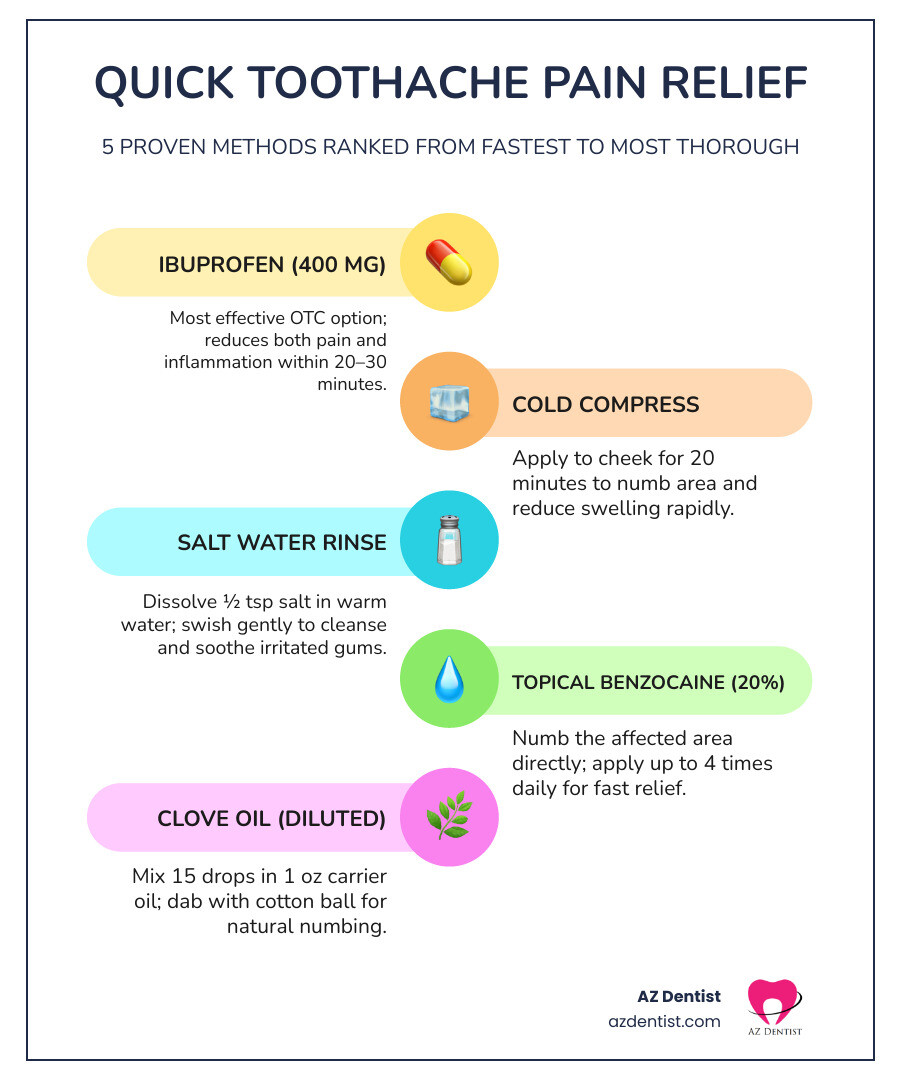
Fastest toothache relief options:
- Ibuprofen (400 mg) — the most effective OTC option; reduces pain and inflammation
- Cold compress — apply to your cheek for 20 minutes to reduce swelling
- Salt water rinse — dissolve ½ tsp salt in warm water and swish gently
- Topical benzocaine gel (20%) — numbs the area directly; apply up to 4 times daily
- Clove oil — dilute 15 drops in 1 oz of carrier oil, dab on affected area with a cotton ball
Important: These are temporary fixes only. If pain lasts more than 1–2 days, see a dentist.
A toothache can stop you in your tracks. It can make eating, sleeping, and focusing nearly impossible. And you’re not alone — approximately 40 million adults in the United States deal with tooth sensitivity and pain.
The pain is your body sending a signal. Something is wrong, and it needs attention. The good news is that while you wait to see a dentist, there are real, proven steps you can take to feel better fast.
I’m Dr. Janne Lynch, and I’ve spent my career at AZ Dentist helping patients find relief from dental pain — including many who came to us in genuine agony from a toothache that had been building for days. Providing quick toothache pain relief is one of the most rewarding things I do, and in this guide I’ll walk you through everything that actually works, and what to avoid.
Common Causes of Tooth Pain and Why It Hurts
To stop the pain, it helps to understand why your tooth is screaming in the first place. Your teeth are not solid, lifeless blocks; they are living structures with highly sensitive nerves inside.
When the hard outer enamel is compromised, the sensitive inner layers are exposed to temperature, bacteria, and pressure. Here are the most common culprits behind that throbbing ache:
- Tooth Decay and Cavities: This is the most common reason for a toothache in both children and adults. Oral bacteria feed on sugars and starches in your food, producing acids that slowly eat through your enamel. Once a cavity penetrates the outer layers and reaches the soft dentin, you will start feeling pain, particularly when eating sweet, hot, or cold foods.
- Pulpitis (Infected Nerve): If decay is left untreated, bacteria reach the pulp—the very center of the tooth containing blood vessels and nerves. This leads to pulpitis (inflammation of the pulp), which causes a deep, constant, throbbing pain.
- Cracked or Chipped Teeth: A physical crack exposes the inner nerve pathways. You might only feel a sharp pain when you bite down, which is a classic indicator of a cracked tooth.
- Teeth Grinding (Bruxism): Many people grind or clench their teeth at night. This constant pressure wears down enamel, irritates the ligaments supporting your teeth, and causes a dull, aching pain across multiple teeth.
- Referred Ear and Jaw Pain: The teeth, jaw, and ears are deeply interconnected by the trigeminal nerve system. Compression or irritation of this nerve can make a dental issue feel like severe ear pain, or vice versa.
- Sinus Infections (Sinusitis): Did you know your upper teeth sit directly beneath your nasal sinuses? When a sinus infection causes fluid pressure to build up, it can press down on the roots of your upper teeth, mimicking a severe toothache.
According to the Mayo Clinic’s guide on Toothache: First aid, identifying whether the pain is constant or triggered by external factors can help determine the urgency of your situation. Temporary irritation from a minor gum scrape or a teeth whitening treatment may resolve in a few days as the teeth remineralize, but pain from structural decay or infection will persist until a dentist treats the root cause.
Step-by-Step Home Remedies for Quick Toothache Pain Relief
If you are dealing with sudden pain over the weekend or late at night, immediate self-care is your best defense. Before reaching for medications, follow this quick, step-by-step physical cleansing routine to relieve pressure around the painful tooth.
Step 1: Cleanse the Area
Often, a toothache is worsened by food particles or debris wedged between the teeth, increasing pressure on the inflamed gums.
- Warm Water Rinse: Gently rinse your mouth with warm water to loosen any loose debris.
- Gentle Flossing: Carefully run dental floss around the aching tooth. Do not snap the floss down hard against your gums, as this can worsen the irritation.
Step 2: Apply a Cold Compress
If your toothache is caused by physical trauma, or if you notice visible swelling in your cheek, a cold compress is highly effective. The cold constricts the blood vessels in the area, reducing swelling and numbing the pain.
- Wrap a bag of ice or a bag of frozen vegetables in a clean towel.
- Hold it against the outside of your cheek for 20 minutes.
- Take a 20-minute break, then repeat as needed.
If you are in the West Valley and need immediate, professional care, checking out our guide on emergency dental care how to handle a toothache in glendale can help you navigate the next steps seamlessly.
Natural Home Remedies for Quick Toothache Pain Relief
If physical clearing and cold therapy aren’t quite enough, your kitchen pantry is home to several natural remedies that offer impressive, scientifically backed relief.
1. Warm Saltwater Rinse
A saltwater rinse is one of the easiest and most effective first-line remedies. Salt is a natural disinfectant that draws out fluids from inflamed tissues, reducing swelling and clearing away bacteria.
- The Ratio: Mix 1/2 teaspoon of salt into a glass of warm water.
- The Method: Swish the warm mixture in your mouth for 30 seconds, then spit it out. Do not swallow it.
- Note: Children should avoid saltwater rinses to prevent accidental swallowing.
2. Hydrogen Peroxide Rinse
Hydrogen peroxide is an active antibacterial agent that helps reduce dental plaque and soothe bleeding gums.
- The Ratio: Mix 3% hydrogen peroxide with equal parts water (a 1:1 ratio).
- The Method: Swish the diluted solution in your mouth for 30 seconds, then spit it out completely. Rinse your mouth thoroughly with plain water afterward.
3. Diluted Clove Oil
Clove oil is a time-tested dental remedy. It contains eugenol, a natural chemical compound with powerful anesthetic (numbing) and antiseptic properties.
- The Ratio: Dilute clove essential oil by mixing 15 drops of clove oil with 1 ounce of a gentle carrier oil (like olive, jojoba, or sunflower oil).
- The Method: Dab a tiny amount of the diluted mixture onto a cotton ball or swab, and gently press it against the painful tooth and surrounding gum tissue for a few minutes.
- Warning: Never apply undiluted clove oil directly to your gums, as it can cause painful chemical burns.
4. Peppermint Tea Bags
Peppermint contains menthol, which has mild numbing properties that can soothe sensitive gums.
- The Method: Steep a peppermint tea bag in hot water for a couple of minutes. Let the tea bag cool down until it is warm (not hot), or place it in the freezer for a few minutes to chill it. Apply the tea bag directly to the aching area.
5. Fresh Garlic Paste
Garlic has been valued for its medicinal properties for thousands of years. When crushed, it releases allicin, a powerful antibacterial agent that can kill disease-causing bacteria and temporarily dull pain.
- The Method: Crush a fresh garlic clove to create a smooth paste, mix in a tiny pinch of salt, and apply a small dab directly to the affected tooth. Alternatively, you can slowly chew a fresh clove of garlic.
6. Vanilla Extract
Vanilla extract contains alcohol, which acts as a mild numbing agent, alongside antioxidants that promote healing.
- The Method: Dab a small amount of real vanilla extract onto a cotton ball and apply it directly to the aching tooth.
7. The Toothache Plant (Spilanthes)
The “toothache plant” is a unique herb containing spilanthol, an active compound that creates a rapid, tingling, and numbing sensation when chewed. If you have access to this botanical remedy, chewing a fresh leaf can provide instant, temporary relief.
Over-the-Counter and Prescription Medications for Dental Pain
While natural remedies are fantastic for a quick fix, over-the-counter (OTC) medications are often necessary to keep severe pain at bay while you arrange to see a dentist.
To help you choose the right option, here is a quick comparison of the primary OTC medications used for dental pain:
| Medication Type | Active Ingredient | How It Works | Best For | Max Daily Dose (Adults) |
|---|---|---|---|---|
| NSAID | Ibuprofen (Advil, Motrin) | Reduces pain and swelling by blocking inflammatory enzymes | Inflammatory throbbing, pulpitis, dental trauma | 2,400 mg |
| NSAID | Naproxen Sodium (Aleve) | Long-lasting anti-inflammatory action | Sustained daytime or overnight pain relief | 1,100 mg |
| Analgesic | Acetaminophen (Tylenol) | Blocks pain signals in the central nervous system | Patients who cannot take NSAIDs (e.g., stomach ulcers) | 4,000 mg |
| Topical Gel | Benzocaine 20% | Local anesthetic that blocks nerve pathways | Instant, localized surface numbing | Up to 4 times daily |
The official Evidence-Based Clinical Practice Guideline for the Temporary Pharmacologic Management of Acute Dental Pain from the American Dental Association highlights that non-opioid medications (like ibuprofen and acetaminophen) are highly recommended as first-line therapy over opioid prescriptions.
Combining an NSAID with acetaminophen (for example, taking 400 mg of ibuprofen alongside 500 mg of acetaminophen) is clinically proven to be incredibly effective for severe dental pain, often outperforming mild opioids without the risks of dependency or severe side effects. For a deeper look at your options, read our guide on the top toothache tablets that actually work.
Safe OTC Medications for Quick Toothache Pain Relief
If you decide to use topical numbing products, it is absolutely crucial to use them safely. Many popular over-the-counter dental gels and liquids contain benzocaine or a combination of benzocaine and soothing menthol.
Products like the DailyMed – TOOTHACHE AND GUM RELIEF- benzocaine, menthol liquid are highly effective for short-term localized relief, but they carry important safety warnings:
- Methemoglobinemia Risk: Benzocaine has been linked to a rare but life-threatening condition called methemoglobinemia, which severely reduces the amount of oxygen carried through your bloodstream.
- Children Under 2 Warning: Because of the risk of methemoglobinemia, never use benzocaine-containing products (such as teething gels) on children under the age of 2.
- No Direct Aspirin on Gums: A common, dangerous myth is that placing an aspirin tablet directly against an aching tooth will soothe the pain. In reality, aspirin is highly acidic and will cause severe chemical burns on your delicate gum tissue. Always swallow oral pain relievers with water; never let them dissolve in your mouth.
When using maximum-strength products like the DailyMed – 7 SELECT ORAL PAIN MAXIMUM STRENGTH RELIEF- benzocaine gel, ensure you are checking the Active Ingredient profile. Limit your application of products like 5820375 CVS Toothache & Gum Relief Liquid to a maximum of 4 times per day, and do not use them for more than 7 consecutive days without consulting a dentist.
When to Seek Emergency Dental Care for a Toothache
While at-home remedies and over-the-counter pills are excellent for buying you some comfortable hours, they do not cure the underlying infection or decay.
You should call a dentist immediately if your pain persists for more than 1 to 2 days, or if you notice any of these warning signs of a serious, spreading infection:
- A fever or chills
- Visible swelling in your cheek, jaw, neck, or under your eye
- A foul-tasting discharge or pus draining from the gum line
- Severe pain when biting down or touching the tooth
When to go straight to the ER: If your dental infection causes swelling so severe that you have difficulty breathing, swallowing, or speaking, do not wait for a dentist. Go to the nearest hospital emergency room immediately.
If you suspect you have a spreading infection, we can evaluate your condition and discuss how to treat tooth infection with antibiotics to safely clear the bacteria before performing definitive treatment.
No matter where you are in the Valley, we have you covered. You can reach our dedicated teams at emergency dentist phoenix or find after-hours support with a 24 hour dentist scottsdale to get out of pain fast.
Frequently Asked Questions About Toothaches
How do you get rid of a toothache at night?
Nighttime toothaches are notoriously painful because lying flat causes blood to pool in your head, increasing pressure on the sensitive nerves inside your aching tooth. To get some sleep:
- Elevate your head using extra pillows to reduce blood pressure in your jaw.
- Take an OTC anti-inflammatory like ibuprofen or naproxen before bed.
- Rinse with a warm saltwater or fluoride mouthwash to keep the area clean.
- Apply a cold compress to your cheek to dull the nerve sensations.
Can a sinus infection cause a toothache?
Yes! The roots of your upper molars sit directly beneath your maxillary sinuses. When you have a sinus infection, the pressure and inflammation in your sinus cavities press down on these dental nerve endings. This typically causes a dull, aching sensation across several upper teeth rather than a single, sharp pain in one tooth.
How long does a toothache typically last?
It entirely depends on the cause. Temporary pain from minor gum irritation, a piece of food stuck in your teeth, or a recent teeth whitening session usually resolves on its own within a day or two. However, a toothache caused by a cavity, cracked tooth, or abscessed nerve will not go away without professional dental treatment. Masking the pain with painkillers will only allow the infection to grow worse.
Conclusion
When you need quick toothache pain relief, utilizing a combination of warm saltwater rinses, cold compresses, and over-the-counter NSAIDs like ibuprofen can help you manage the discomfort safely. However, the only way to say goodbye to the pain for good is to have a professional diagnose and treat the source.
To prevent painful toothaches from returning, we recommend keeping up with a simple, daily oral hygiene routine:
- Brush your teeth twice daily for at least 2 minutes using a soft-bristled toothbrush and fluoride toothpaste.
- Floss once a day to clean away plaque and food particles between your teeth.
- Limit your intake of highly sugary, acidic, or sticky foods that feed decay-causing bacteria.
- Schedule regular professional cleanings and check-ups twice a year so we can catch tiny cavities before they turn into agonizing dental emergencies.
At AZ Dentist, we are dedicated to providing comprehensive, comfortable, and affordable dental care. We want you to “come as a patient, leave as a friend” while achieving the healthy smile of a lifetime. Whether you are looking for care at AZ Dentist Scottsdale, AZ Dentist Glendale, AZ Dentist Sun City, or AZ Dentist Sedona, our compassionate team is here to help you.
If you are dealing with a painful tooth, don’t wait for the pain to get worse. Visit our Pillar Page: Toothache Conditions to learn more, or contact us today to schedule your appointment and get the lasting relief you deserve!