

How Whitening Toothpastes Work and Key Ingredients
Finding the best toothpaste for whitening teeth doesn’t have to be complicated. Here’s a quick look at top-rated options by category:
| Category | Top Pick |
|---|---|
| Best Overall | Colgate Optic White Pro Series |
| Best for Sensitive Teeth | Sensodyne Extra Whitening |
| Best Natural Formula | Hello Naturally Whitening |
| Best with Baking Soda | Arm & Hammer Advance White |
| Best Professional-Grade | Opalescence Whitening |
| Best for Daily Maintenance | Sensodyne Full Protection Whitening |
Did you know that 50% of people look at your smile first when meeting you? That’s a striking reason so many people want brighter, whiter teeth.
Whitening toothpaste is one of the easiest ways to work toward that goal. You’re already brushing twice a day — the right toothpaste just makes every brush count more.
But not all whitening toothpastes are equal. Some use gentle chemical agents like hydrogen peroxide to dissolve stains. Others rely on abrasives to scrub them away. A few use color tricks that wash off after an hour. And some — like charcoal toothpastes — can actually damage your enamel over time, making teeth look more yellow in the long run.
This guide cuts through the noise. I’ll help you understand what actually works, what to avoid, and which products are worth your time.
I’m Dr. Janne Lynch, a cosmetic dentist with over 15 years of experience helping patients in Arizona achieve healthier, more confident smiles at AZ Dentist Scottsdale, AZ Dentist Glendale, AZ Dentist Sun City, and AZ Dentist Sedona. Choosing the best toothpaste for whitening teeth is one of the most common questions I hear from patients, and I’m here to give you a straight, dentist-backed answer. Let’s start with how these products actually work.
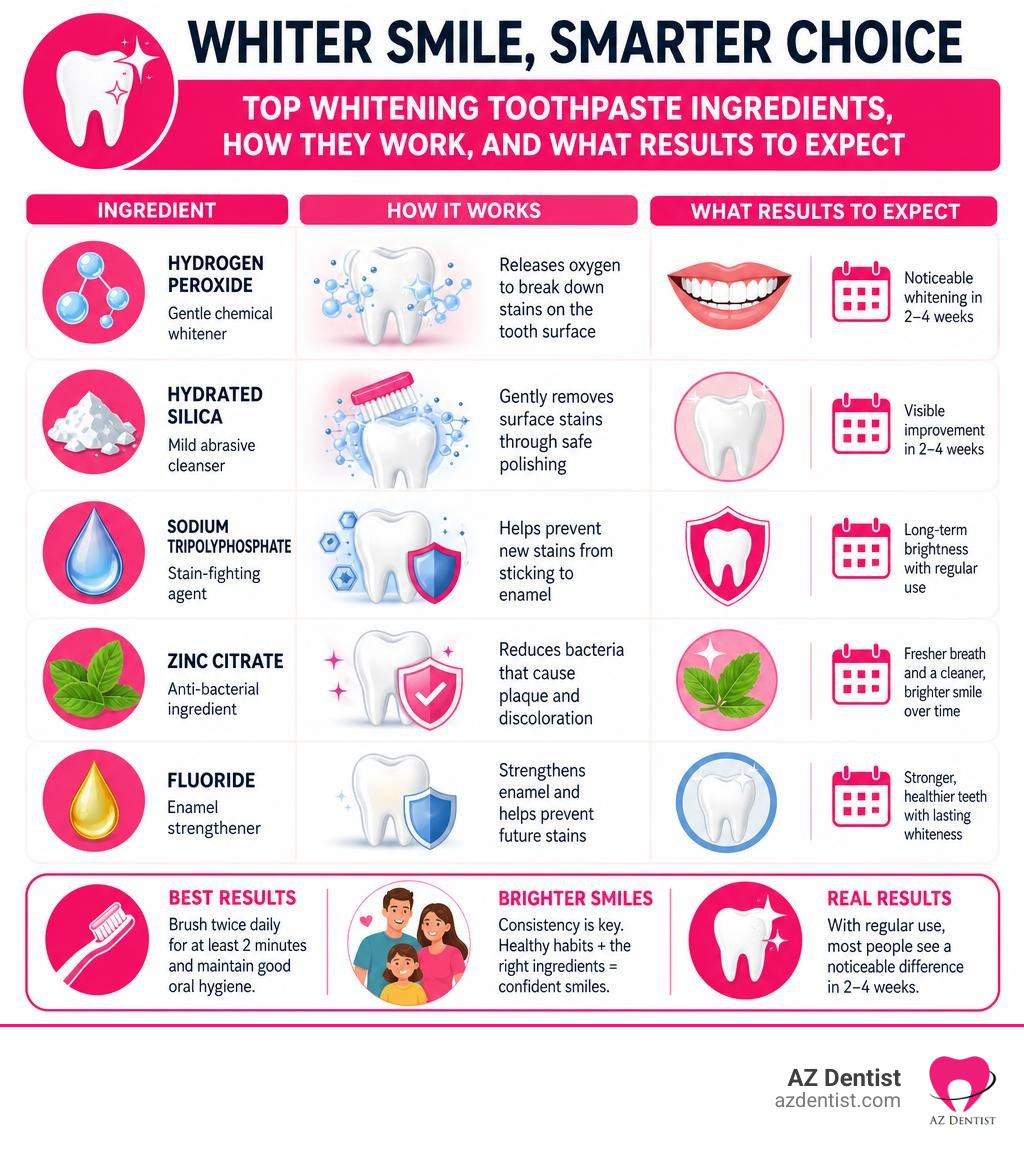
Quick best toothpaste for whitening teeth terms:
To choose the right product, you must first understand how teeth accumulate discoloration. Stains are not all created equal, and the way a toothpaste addresses them depends heavily on its active ingredients.
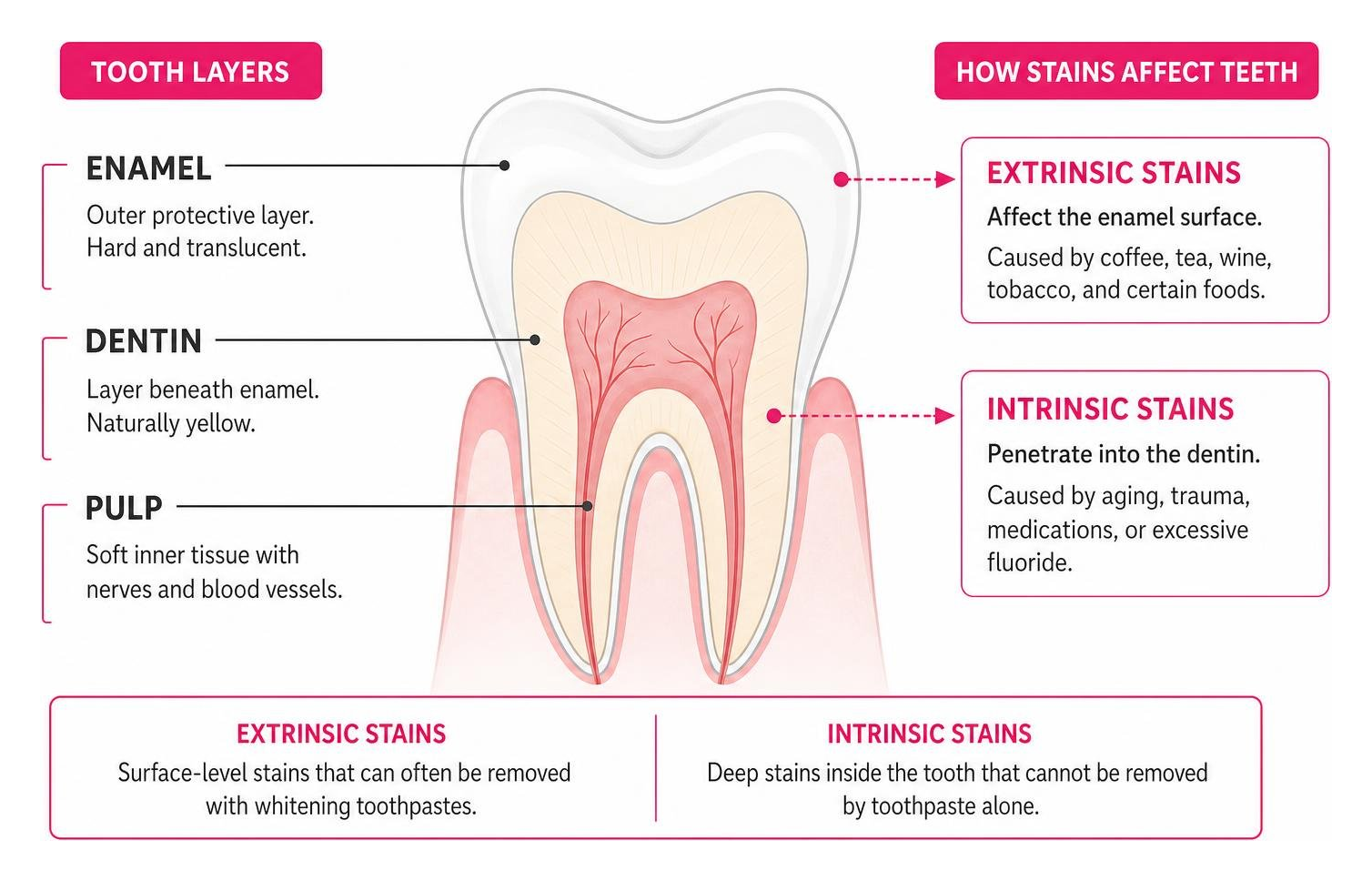
Extrinsic vs. Intrinsic Stains
When we talk about tooth discoloration, we divide stains into two primary categories:
- Extrinsic Stains: These are surface-level discolorations that form on the outer enamel layer. They are typically attracted to the dental pellicle—a thin, natural layer of saliva proteins that forms over your teeth. Lifestyle factors are the main culprits here. Drinking coffee, sipping red wine, enjoying dark teas, and eating pigmented foods like berries all contribute to extrinsic staining. You can read more about how these daily habits impact your smile in our detailed guide on understanding coffee stains on teeth.
- Intrinsic Stains: These stains live deep within the inner dentin layer of the tooth. Intrinsic discoloration can be caused by aging, dental trauma, excessive fluoride exposure during childhood, or certain medications like tetracycline. Because these stains are locked inside the tooth structure, standard over-the-counter whitening toothpastes cannot correct or lighten them.
Chemical vs. Physical Stain Removal
Whitening toothpastes clear away extrinsic discoloration using two main mechanisms: physical abrasion and chemical action.
Physical stain removal relies on mild abrasives to mechanically polish the enamel. Ingredients like hydrated silica, calcium carbonate, and baking soda act as tiny scrubbers that sweep away plaque and surface stains.
Chemical stain removal, on the other hand, utilizes active bleaching agents or stain-dissolving compounds. Rather than scrubbing, these chemicals break down the molecular bonds holding the stains to your teeth.
For example, high-quality formulas like Colgate Optic White Advanced Enamel Strength Toothpaste with 2% Hydrogen Peroxide use stabilized hydrogen peroxide to penetrate the enamel and lift deep-set stains, offering a deeper level of whitening than purely abrasive alternatives.
Hydrogen Peroxide and Remineralizing Agents
Hydrogen peroxide is the gold standard active whitening ingredient used in professional dental offices. In daily-use toothpastes, it is typically formulated at lower concentrations (ranging from 1% to 5%) to ensure it is safe for enamel.
To achieve rapid results, some advanced options like the Colgate Optic White Pro Series Toothpaste utilize a 5% hydrogen peroxide concentration combined with proprietary “ActivShine” technology to chemically dissolve years of built-up stains.
However, repeated exposure to whitening agents can sometimes stress the enamel. That is why modern formulations often include remineralizing agents to rebuild and protect your teeth.
Ingredients like nano-hydroxyapatite (n-Ha) and calcium phosphate work to restore lost minerals. Hydroxyapatite naturally makes up 97% of your tooth enamel.
By using a formula like Snow Nano-Hydroxyapatite Toothpaste, you can actively remineralize microscopic enamel defects and reduce overall tooth sensitivity while gently lifting surface discoloration.
Evaluating the Best Toothpaste for Whitening Teeth by Category
When selecting the best toothpaste for whitening teeth, you must balance your aesthetic goals with your unique oral health needs.
To help you compare the two primary methods of at-home whitening, let’s look at how chemical and physical whitening toothpastes stack up:
| Feature | Chemical Whitening (Peroxide-Based) | Physical Whitening (Abrasive-Based) |
|---|---|---|
| Primary Mechanism | Oxidizes and dissolves stain molecules | Mechanically scrubs away surface buildup |
| Enamel Impact | Low abrasion, but can cause temporary sensitivity | Can wear down enamel if too abrasive |
| Stain Targeting | Addresses both surface and deeper extrinsic stains | Targets surface-level extrinsic stains only |
| Key Ingredients | Hydrogen peroxide, carbamide peroxide | Hydrated silica, baking soda, calcium carbonate |
No matter which category you choose, we always emphasize the importance of protecting your teeth during the process. If you want to dive deeper into this topic, check out our guide on how to whiten teeth without damaging enamel.
The Best Toothpaste for Whitening Teeth for Sensitive Gums
Many patients avoid whitening products because they fear the classic “zingers”—those sudden, sharp pains caused by tooth and gum sensitivity. Fortunately, you do not have to choose between a bright smile and comfortable teeth.
The secret lies in choosing a toothpaste that pairs gentle whitening agents with desensitizing ingredients like potassium nitrate or stannous fluoride. Potassium nitrate works by traveling down microscopic pathways in your teeth to calm the nerves, effectively blocking pain signals before they start. Stannous fluoride acts as a protective shield, sealing off exposed dentin tubules while simultaneously fighting cavities.
If you prefer a natural approach to sensitivity relief, Davids Nano Hydroxyapatite Whitening Toothpaste is an exceptional option. It uses rod-shaped nano-hydroxyapatite particles to physically fill in exposed dentin tubules, rebuilding enamel structure and soothing nerve sensitivity without relying on synthetic chemicals.
The Best Toothpaste for Whitening Teeth with Natural Ingredients
If you prefer to keep your oral care routine free of artificial dyes, preservatives, and foaming agents like sodium lauryl sulfate (SLS), the natural category has made massive strides in recent years.
Natural whitening formulas swap out harsh synthetic chemicals for gentle, plant- and mineral-derived alternatives:
- Baking Soda & Calcium Carbonate: These serve as mild, natural micro-abrasives that polish away surface stains without scratching your enamel.
- Xylitol: A natural sweetener derived from birch trees that oral bacteria cannot digest, helping to prevent cavities.
- Coconut Oil: Often included for its soothing properties and natural ability to reduce plaque-causing bacteria.
- Essential Oils: Peppermint, spearmint, and tea tree oils provide natural breath-freshening benefits.
While some natural toothpastes are fluoride-free, many brands now offer natural options with fluoride to ensure your teeth remain fully protected against decay. If you do choose a fluoride-free natural whitening paste, we often recommend alternating its use with a standard fluoride toothpaste to keep your enamel strong.
Safety Considerations: Abrasiveness and Enamel Protection
While we all want a sparkling white smile, protecting the structural integrity of your enamel must always come first. Enamel is the thin, protective outer layer of your teeth. Once it is worn away, it cannot grow back.
Understanding the RDA Scale
To measure how abrasive a toothpaste is, dental professionals refer to the Relative Dentin Abrasivity (RDA) scale. This standardized scale assigns a numerical value to toothpastes based on how quickly they wear down dentin:
- 0 to 70 (Low Abrasiveness): Safe for daily, long-term use. Great for sensitive teeth.
- 71 to 150 (Medium Abrasiveness): Standard for most mainstream toothpastes. Effective at stain removal.
- 151 to 200 (High Abrasiveness): Highly abrasive. Should be used with caution, as daily use can wear down enamel over time.
- 201 to 250 (FDA Limit): The absolute maximum safety limit allowed.
The American Dental Association (ADA) recommends choosing a toothpaste with an RDA score under 200 for daily use. If you use a highly abrasive toothpaste paired with a hard-bristled toothbrush or aggressive brushing habits, you run the risk of exposing the yellow dentin underneath, making your teeth look more yellow over time.
To prevent this, we advise our patients at AZ Dentist to always use a soft- or extra-soft-bristled toothbrush and apply gentle, circular motions. For more tips on keeping your teeth safe, read our expert advice on safe teeth whitening practices.
Ingredients to Avoid and the ADA Seal of Acceptance
When shopping for a whitening toothpaste, there are several ingredients you should approach with caution:
- Activated Charcoal: Despite its trendiness, charcoal is highly abrasive. It acts like sandpaper on your teeth, wearing away enamel and leaving your smile vulnerable to decay and sensitivity. To date, no charcoal toothpastes carry the ADA Seal of Acceptance.
- Harsh Abrasives: Avoid toothpastes with excessively gritty textures that do not publish their RDA scores.
- Sodium Lauryl Sulfate (SLS): While SLS is a common foaming agent, it can trigger painful canker sores and irritate sensitive gums in some individuals.
To ensure your toothpaste is both safe and effective, always look for the ADA Seal of Acceptance on the packaging. To earn this seal, manufacturers must submit rigorous scientific evidence proving that their product is safe for daily use, protects against cavities, and will not damage your enamel.
Frequently Asked Questions About Whitening Toothpastes
Understanding the differences between various whitening options can help you make an informed decision. For a broader look at how different techniques compare, you can read our comparison of the difference between teeth whitening methods.
How long does it take to see results from whitening toothpaste?
Patience and consistency are key when using whitening toothpaste. During clinical testing, most users see minor improvements of only one or two shades after a two-week period of twice-daily brushing. To achieve more dramatic, visible results, it typically takes up to six weeks of regular, daily use.
Can whitening toothpaste replace professional whitening treatments?
In short: no. Whitening toothpastes are excellent for removing everyday surface stains and maintaining your brightness after a dental visit, but they cannot match the power of professional clinical bleaching.
While toothpaste typically lightens your teeth by about one shade over several weeks, a professional in-office treatment can safely whiten your teeth by two to eight shades in a single appointment. This is because professional treatments use higher concentrations of active peroxide that can safely penetrate deep into the tooth structure to target intrinsic stains.
If you are looking for the absolute fastest and most dramatic results, we recommend exploring the most effective way to whiten teeth.
Is charcoal or purple toothpaste safe and effective?
- Charcoal Toothpaste: As mentioned, dentists do not recommend charcoal toothpaste. Because it is highly abrasive, it wears down your white enamel, exposing the naturally yellow dentin beneath. This actually makes your teeth look more yellow and increases tooth sensitivity.
- Purple Toothpaste: Purple toothpaste relies on color theory rather than chemical bleaching. Because purple and yellow are complementary colors on the color wheel, the purple dye temporarily masks yellow tones on your teeth, creating an optical illusion of brightness. However, this effect is purely cosmetic, temporary, and will wash away as you eat and drink. Furthermore, some purple dyes can actually stain your teeth over time.
Conclusion: Achieving Your Smile of a Lifetime
Choosing the best toothpaste for whitening teeth is a fantastic way to maintain a bright, healthy smile as part of your daily routine. By understanding the differences between physical and chemical whitening, keeping an eye on RDA scores, and prioritizing enamel-safe ingredients, you can safely lift daily stains from coffee, tea, and food.
However, if you have stubborn, deep-set stains, older dental restorations, or want a dramatic transformation that toothpaste alone simply cannot deliver, we are here to help.
At AZ Dentist, we love helping our patients achieve the “smile of a lifetime.” We invite you to schedule a consultation at any of our convenient Arizona locations—including AZ Dentist Scottsdale, AZ Dentist Glendale, AZ Dentist Sun City, and AZ Dentist Sedona—to discuss our customized, comfortable professional teeth whitening services. Let us help you find the safest, most effective path to a radiant smile!