

Compare Denture Options Before You Choose
Dentures can replace some or all missing teeth, but the best choice depends on how many teeth you need to replace, how much stability you want, and your long-term goals. Traditional full or partial dentures are removable, while implant-retained dentures snap onto implants for added security and fixed implant-supported options stay in place. When comparing options, look beyond the initial treatment: comfort, maintenance, expected relines, durability, and insurance coverage all affect overall value.
Tooth loss can change chewing, speech, facial support, and confidence. A well-designed appliance can help restore each of these, but every option has tradeoffs. For example, removable dentures are often the simplest path to restoring a smile, while implant-based choices can reduce slipping and help limit the bone loss that follows missing teeth.
I know dental decisions can feel stressful, especially if past visits have been difficult. At AZ Dentist Scottsdale, AZ Dentist Glendale, AZ Dentist Sun City, and AZ Dentist Sedona, the goal is to help you understand your options clearly and choose at a pace that feels comfortable.
I’m Dr. Janne Lynch, and my training in cosmetic dentistry and oral surgery helps me plan dentures that support both natural-looking smiles and everyday function. I focus on listening first, then helping each patient compare practical choices for a healthier, more confident smile.
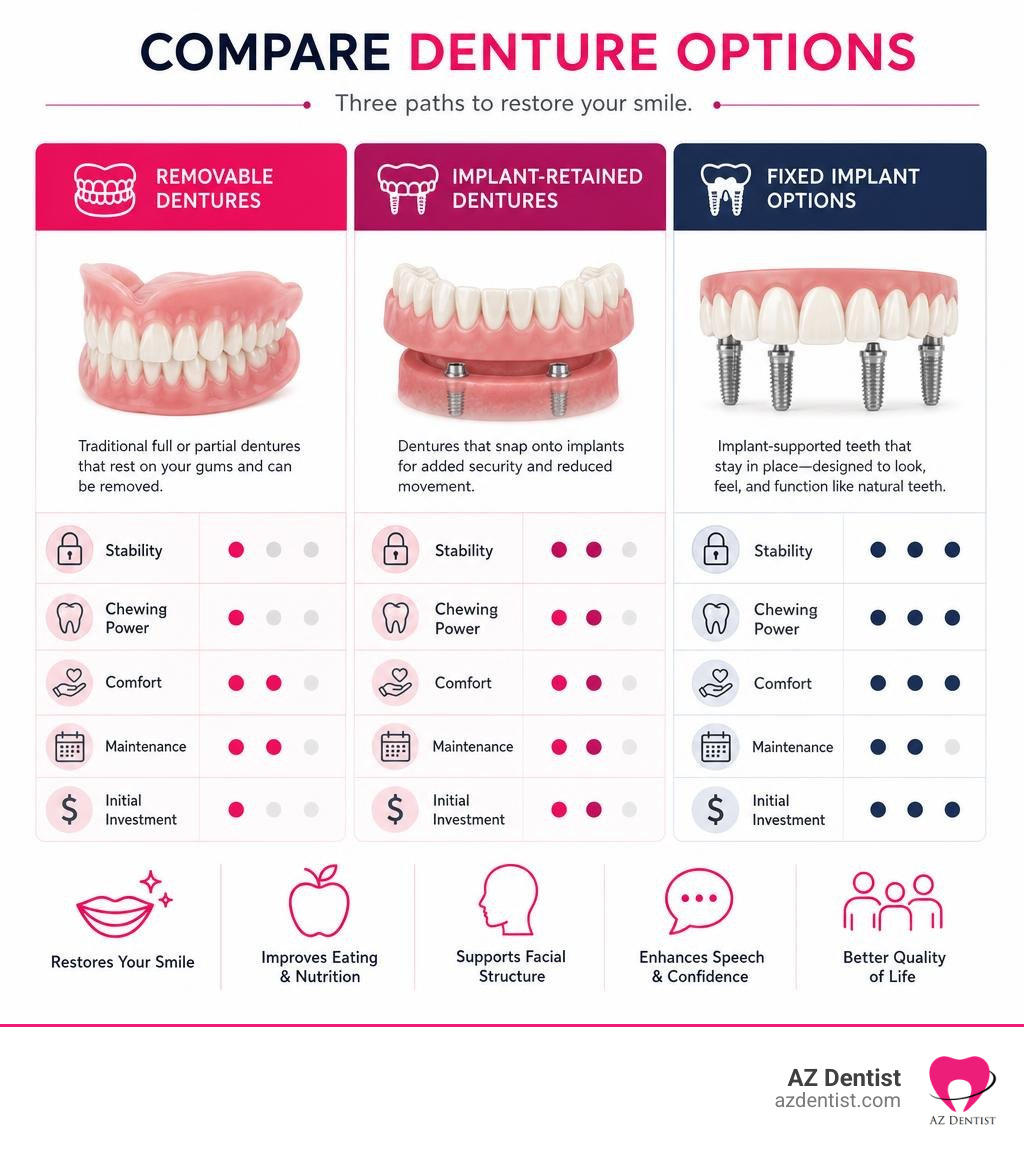
Understanding the Different Types of Dentures and Materials
When we discuss tooth replacement with our patients, we always begin by looking at the engineering behind the prosthetics. Modern dental appliances are crafted from a combination of specialized, biocompatible materials tailored to balance durability, lightweight comfort, and realistic aesthetics.
The base of a prosthetic is typically constructed from high-impact acrylic resin, which can be color-matched to your natural gum tissues, complete with delicate veining. For partial appliances requiring high structural strength in a slim profile, chrome cobalt metal frameworks provide a rigid, long-lasting backbone. If you have metal sensitivities or prioritize subtle aesthetics, flexible nylon thermoplastics offer an adaptable, translucent alternative that gently hugs the gumline.
The replacement teeth themselves are usually made from composite resin or hardened porcelain. While porcelain delivers unmatched translucency and stain resistance, resin teeth bond exceptionally well to the acrylic base and provide a natural, shock-absorbing bite. To learn more about standard dental prosthetic design, you can review this Cleveland Clinic guide on dentures.
Conventional Full and Removable Partial Dentures
Complete or full dentures replace an entire dental arch. In the upper jaw, the acrylic base covers the roof of the mouth, utilizing natural suction and saliva to create a seal against your palate. In the lower jaw, where the tongue needs room to move, the appliance rests along the U-shaped gum ridge, relying on surrounding cheek and tongue muscles to stay in balance.
When you retain healthy natural teeth, partial dentures bridge the gaps to keep your remaining teeth from shifting out of alignment. Depending on where you need tooth replacement, several configurations are available:
- Cast Metal Partials: These utilize precision cast clasps that hook securely around neighboring natural teeth, offering exceptional stability.
- Aesthetic Anterior Solutions: If you have missing front teeth, partial dentures for front teeth are crafted with hidden attachments to maintain a completely natural smile.
- Precision Attachments: For patients wanting to avoid visible wire clasps, precision attachment partial dentures connect via interlocking male and female components housed inside dental crowns.
- Immediate Dentures: Placed immediately following necessary extractions, these allow you to leave our office with a full set of teeth on day one while your underlying tissues heal.
We regularly help patients evaluate different types of dentures to address varying stages of tooth loss, particularly when designing customized dentures for seniors whose gum tissue and bone contours require gentle, adaptable support.
Implant-Retained and Fixed Implant Solutions
While conventional prosthetics remain a reliable standard, modern dentistry allows us to anchor appliances directly into the jawbone using biocompatible titanium posts.
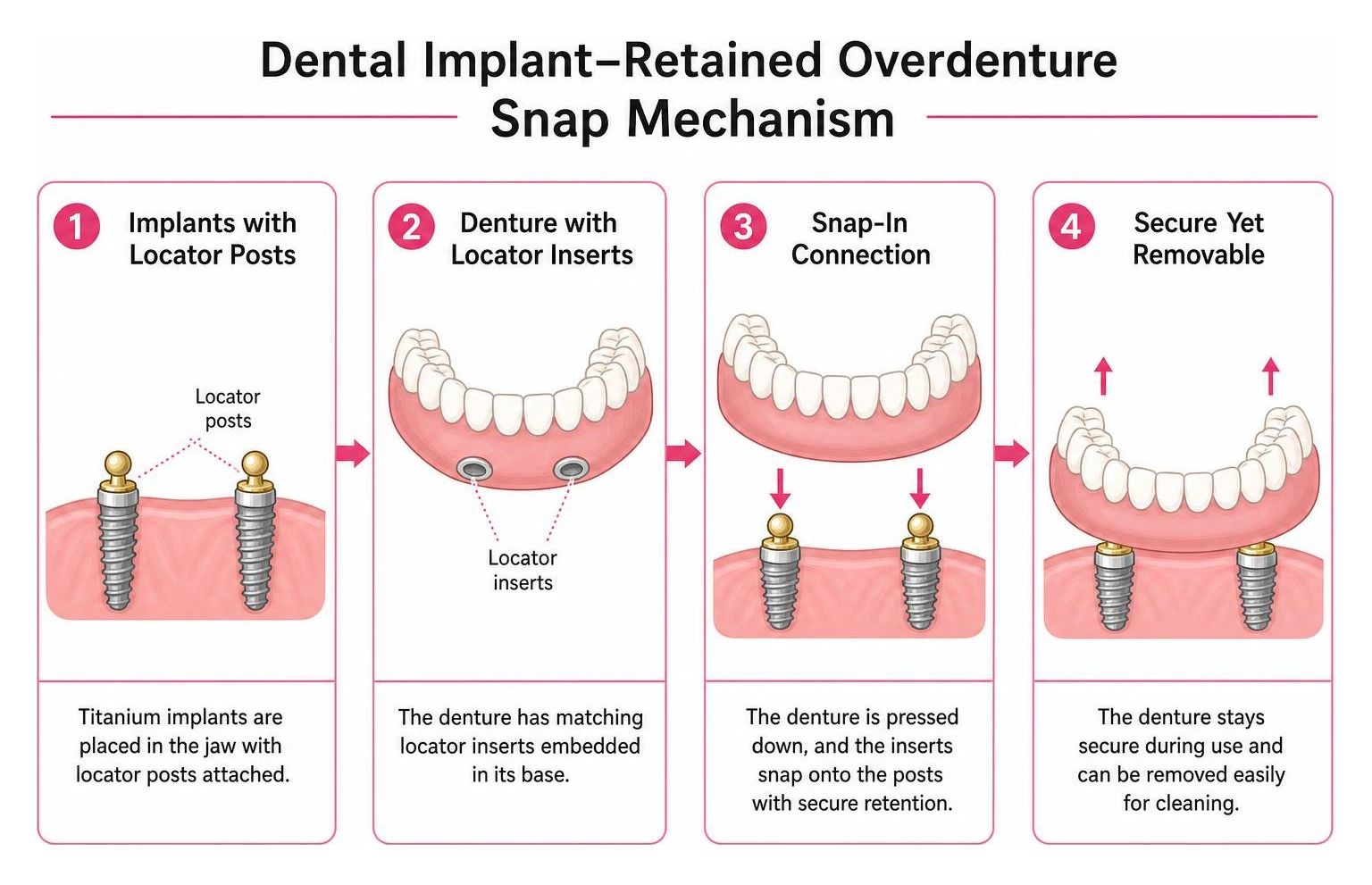
There are two primary categories of implant-anchored options:
- Implant-Retained (Snap-In) Dentures: Often utilizing two to four dental implants per arch, these removable appliances feature locator attachments that snap securely onto corresponding posts. This design eliminates slipping without messy adhesives, and for the upper arch, it often allows us to remove the bulky acrylic plate covering the roof of your mouth, restoring your full sense of taste and temperature. You can explore this in our implant-retained dentures complete guide.
- Implant-Supported (Fixed) Dentures: These non-removable hybrid bridges are permanently anchored onto four to six implants. Only a dental professional can remove them. As detailed in our overview of implant-supported dentures, fixed options provide the closest functional equivalent to natural teeth, restoring nearly your full natural biting force.
Critically, titanium implants biologically stimulate the surrounding jawbone tissue during chewing, signaling your body to preserve bone density and preventing the facial collapse commonly seen over decades of tooth loss.
Comparing Prosthetic Options, Benefits, and Long-Term Costs
Every tooth replacement path balances initial treatment considerations, day-to-day comfort, and long-term functional stability. Traditional appliances provide a non-surgical, rapid path to complete smile rehabilitation. However, because conventional options rest purely on the soft tissues of the gums, they do not prevent ongoing bone resorption in the jaw.
Implant systems require a surgical placement phase and initial healing time, but they provide structural support that stabilizes your bite, preserves facial dimensions, and prevents the movement or clicking that sometimes accompanies traditional dentures.
| Feature | Conventional Full Denture | Removable Partial Denture | Implant-Retained (Snap-In) | Fixed Implant-Supported |
|---|---|---|---|---|
| Attachment Type | Suction & soft tissue seal | Clasps or precision locks | Locator snap attachments | Screwed directly into implants |
| Palate Coverage (Upper) | Full coverage required | Partial framework | Open palate possible | Horseshoe/palate-free |
| Chewing Efficiency | Low to moderate | Moderate | High | Maximum (near natural) |
| Bone Preservation | None (bone gradually shrinks) | Minimal | High around implant sites | High across the arch |
| Daily Removal Required? | Yes (8 hours per day) | Yes (8 hours per day) | Yes (for cleaning) | No (brushed in place) |
| Expected Lifespan | 7 to 10 years | 7 to 10 years | 10+ years (locator caps relined) | 15+ years to lifetime |
Cost Factors and Value Comparison
When evaluating the overall investment of your dental restoration, look beyond the initial lab fabrication fees. A comprehensive financial perspective considers:
- Preparatory Care: Necessary extractions, bone grafting, or periodontal therapy to establish a healthy oral foundation.
- Material Grades: High-grade cosmetic teeth and milled zirconia or titanium frameworks offer higher durability and natural light reflection compared to standard entry-level resins.
- Maintenance and Relining: Because your jawbone naturally remodels over time, conventional appliances require routine relining every one to two years to maintain fit.
- Replacement Cycles: A traditional denture typically reaches the end of its useful lifespan after seven to 10 years.
- Insurance Utilization: Many dental benefit plans provide coverage percentages for basic removable appliances, while implant coverage varies based on your specific plan design.
Fixed bridges and implant-supported arches represent a higher initial financial commitment, but their ability to halt bone resorption and eliminate adhesive purchases often makes them an exceptional long-term investment in your health and quality of life.
Step-by-Step Fabrication, Fitting, and Routine Maintenance
Creating a custom denture is a collaborative process between you, our clinical team, and our master dental laboratory technicians. Precision at each stage guarantees an appliance that looks balanced and feels natural.
- Diagnostic Impressions and Records: We capture detailed impressions of your ridges and palate to cast accurate stone study models of your mouth.
- Bite Registration: Using wax rim blocks, we record your natural jaw relationship, lip support, and vertical bite dimension.
- Wax Try-In: We place the teeth in a pliable wax mockup inside your mouth. This lets us check your bite, assess phonetic clarity, and ensure you love the aesthetic shape, shade, and alignment of your new teeth before the final acrylic is cured.
- Final Delivery and Fitting: We deliver the finished appliance, inspect tissue contact zones for high-pressure areas, and adjust your occlusion (bite).
Adapting to a new appliance is much like breaking in a new pair of shoes; your oral tissues, tongue, and cheek muscles need time to adjust. As we outline in our guide on adjusting to dentures, increased salivation, minor speech changes, and slight muscle fatigue are completely normal during the first few weeks.
Clinical Fabrication and Daily Care of Dentures
Proper daily care protects your oral health, prevents bad breath, and keeps your appliance looking brilliant. Knowing how to clean dentures correctly prevents accidental damage:
- Rinse After Meals: Run your dentures under lukewarm water after eating to dislodge loose food particles. Never use boiling water, which can warp the acrylic base.
- Gentle Brushing: Clean your appliance daily using a soft-bristled denture brush and a non-abrasive, specialized denture cleanser. Standard toothpastes contain abrasives that scratch acrylic, creating micro-grooves where bacteria and stains can thrive.
- Nightly Soaking: Store your dentures overnight in clean water or an ADA-accepted mild soaking solution to keep the acrylic hydrated and dimensionally stable.
- Mouth and Gum Care: Before reinserting your appliance each morning, gently brush your gums, tongue, palate, and any remaining natural teeth with a soft toothbrush to stimulate circulation and clear plaque.
As your jawbone contours shift, understanding what is a denture reline becomes essential. Relining involves adding new acrylic base material to the tissue-side of your denture to restore a snug, comfortable fit. We recommend a clinical reline every one to two years.
When asking how long do dentures last, research confirms that with proper care and routine relines, the average lifespan of a well-maintained denture is seven to 10 years, after which artificial tooth wear and underlying bone changes typically call for replacement.
Frequently Asked Questions About Tooth Replacement
How long do prosthetic teeth last before needing replacement?
With proper care and maintenance, the average lifespan of a denture is seven to 10 years. Most people will need replacement dentures after seven to 10 years because the acrylic teeth wear down from daily chewing, and the underlying jawbone naturally remodels and shrinks over time. Routine visits allow us to track these structural shifts and advise you when a replacement is needed.
Is it safe to sleep with dental appliances in your mouth?
We advise patients to remove their removable appliances before going to sleep. Leaving your dentures out for at least eight hours a day gives your gums a break, reduces harmful oral bacteria, and keeps your jawbone as strong as possible. Constant pressure from sleeping in your appliances restricts blood circulation in your gum tissues, increasing the risk of inflammation, bacterial buildup, and fungal conditions like denture stomatitis.
What should I do if my prosthetic appliances feel loose or click?
If your appliances start to click while you speak, slip when you chew, or cause localized sore spots on your gums, schedule an evaluation with your dentist promptly. While over-the-counter denture adhesives can provide short-term stability, they are not a substitute for a properly fitting base. Slipping and clicking are clear signs that your bone ridge has remodeled, requiring a professional bite adjustment or a laboratory reline to restore secure retention.
Conclusion
Choosing the right approach to tooth replacement is a deeply personal journey that affects your comfort, health, and everyday confidence. Whether a classic removable partial, a full traditional arch, or a stable implant-retained solution fits your lifestyle best, our priority is ensuring you feel fully supported at every step.
At AZ Dentist, our teams at AZ Dentist Scottsdale, AZ Dentist Glendale, AZ Dentist Sun City, and AZ Dentist Sedona are dedicated to delivering gentle, personalized care that helps you eat comfortably, speak clearly, and smile without hesitation. We invite you to schedule a consultation for dentures with us today so we can work together to restore your smile for years to come.