

What Are Dental Exams — and What Actually Happens at One?
Dental exams are routine visits where a dentist and hygienist check the health of your teeth, gums, and mouth. Most people need one every six months.
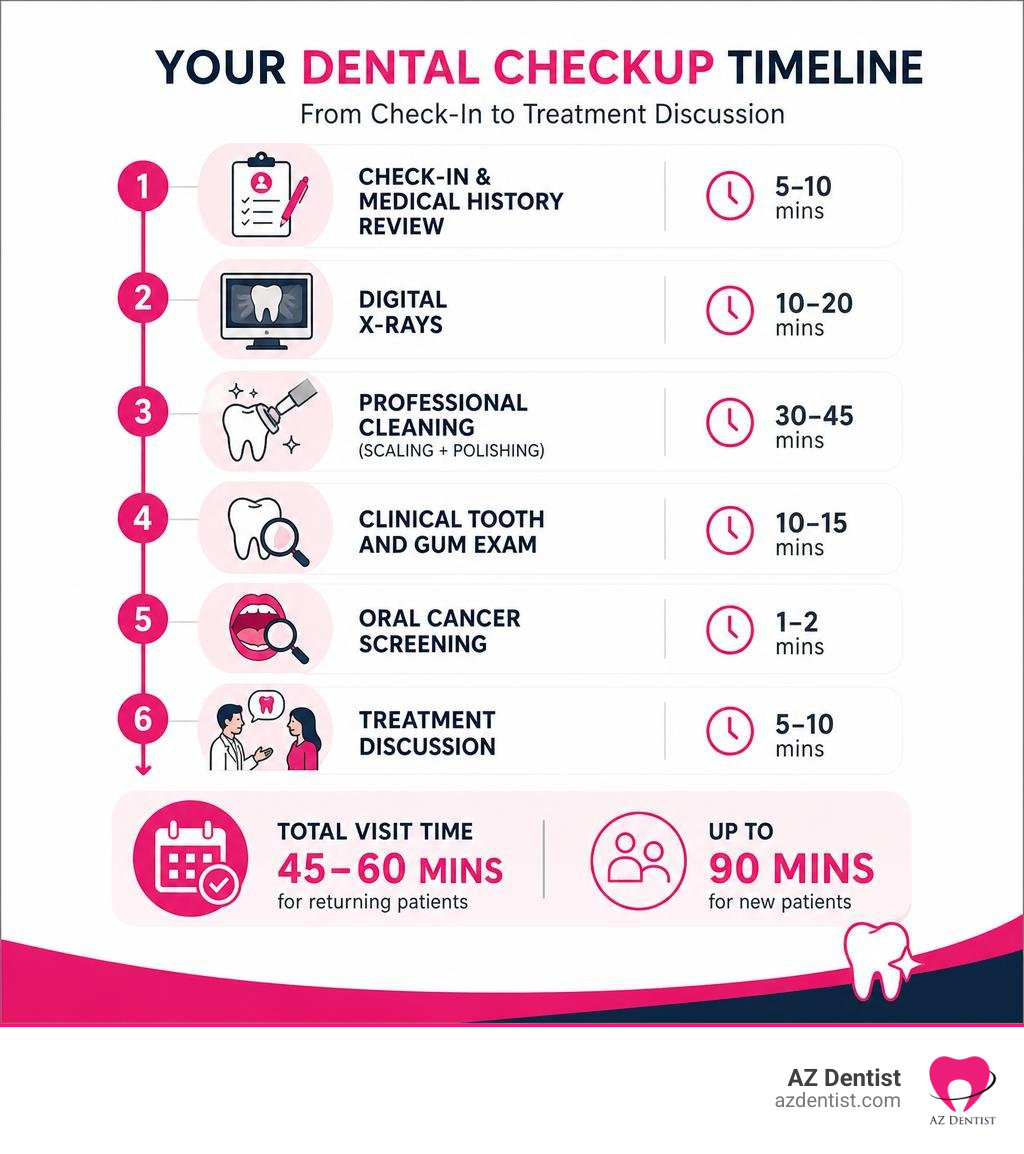
Here’s a quick snapshot of what a standard dental exam includes:
| Component | Who Performs It | Typical Duration |
|---|---|---|
| Medical history review | Front desk / hygienist | 5-10 mins |
| Digital X-rays | Hygienist | 10-20 mins |
| Professional cleaning (scaling + polishing) | Hygienist | 30-45 mins |
| Clinical tooth and gum exam | Dentist | 10-15 mins |
| Oral cancer screening | Dentist | 1-2 mins |
| Treatment discussion | Dentist | 5-10 mins |
Total visit time: roughly 45 to 60 minutes for returning patients, and up to 90 minutes for new patients.
If you’ve been putting off your dental visit — maybe because of a bad experience, fear of pain, or just not knowing what to expect — you’re not alone. Many people feel this way. But understanding exactly what happens during a dental exam can make a real difference.
This guide walks you through every step, clearly and simply.
I’m Dr. Janne Lynch, and at AZ Dentist Scottsdale, AZ Dentist Glendale, AZ Dentist Sun City, and AZ Dentist Sedona, I’ve spent years helping anxious patients feel comfortable and informed during their dental exams — because I genuinely believe that when you know what to expect, the whole experience becomes a lot less intimidating. Let’s walk through it together.
What is the Difference Between a Dental Exam, Checkup, and Cleaning?
When it comes to dental health, terminology can get confusing. You might hear people use the words “checkup,” “exam,” and “cleaning” interchangeably, but clinically speaking, they are different parts of your preventive visit.
A dental checkup is the overall umbrella term for your entire appointment. It is the complete package. When you book a routine checkup, you are scheduling a visit that includes both diagnostic evaluations and preventive therapies.
The dental cleaning is primarily performed by a registered dental hygienist. Their focus is on the physical maintenance of your teeth and gums—scraping away hardened deposits and polishing your pearly whites.
The dental exam, on the other hand, is a highly technical evaluation performed strictly by the dentist. According to the Evaluation of the Dental Patient – Dentistry – MSD Manual Professional Edition , a clinical evaluation is a comprehensive diagnostic review of your hard and soft tissues, bite alignment, and systemic health markers. If you are joining us for the first time, this process is even more thorough, which you can learn about in our guide to the New Patient Examination.
The Role of Dental Exams in Preventive Care
Preventive dentistry is the cornerstone of keeping your mouth healthy and avoiding painful, expensive procedures down the road. During dental exams, we look for problems that you cannot see or feel yet. By the time a cavity hurts, it has usually reached the deeper layers of the tooth, potentially requiring a root canal or crown. Catching it early during a routine exam means we can treat it with a simple, conservative filling.
But it goes beyond just cavities. Your mouth is a window into the rest of your body. Poor oral health is directly linked to systemic Conditions like heart disease, stroke, and diabetes. In fact, many systemic diseases show their very first symptoms in the mouth.
As highlighted by the Dental Exam: MedlinePlus Medical Test , regular evaluations allow us to monitor these systemic connections, protect your natural teeth, and support your overall well-being.
What Happens During a Dental Cleaning vs. an Exam
To understand the difference in real-time, let’s look at the physical steps of the cleaning versus the exam.
During the cleaning portion of your visit, your hygienist uses specialized metal instruments or ultrasonic scalers to remove plaque and tartar (calculus) from your teeth. This is called scaling. Once the scaling is complete, they will use a high-powered electric brush with a gritty paste to polish your teeth, removing surface stains and leaving your enamel feeling perfectly smooth. They will finish up by flossing between every tooth. For a deeper look at this process, check out our 2026 Guide to Essential Dental Cleanings and A Practical Guide to Professional Dental Cleaning.
Once the cleaning is done, the dentist steps in for the actual dental exam. We review any diagnostic digital X-rays, perform an oral cancer screening, measure your gum pockets, check every single tooth for decay, inspect existing dental work (like older crowns or fillings) for wear, and assess your jaw joint (TMJ).
Step-by-Step: What to Expect During Your Dental Exam
Walking into a dental office shouldn’t feel like a mystery. Whether you visit us in Glendale, Scottsdale, Sedona, or Sun City, we want you to feel completely at ease. To help demystify the clinical process, let’s break down exactly what happens step-by-step during a routine clinical visit, as outlined in the Dental check-up | healthdirect guidelines.
Before we begin, we always start with a warm welcome and a review of your medical history. If you’re a new patient, you can even fill out your Patient Forms online ahead of time to save a few minutes!
Step 1: Digital X-Rays and Diagnostics
We cannot treat what we cannot see. While we have excellent vision, we can only see the outer surfaces of your teeth with our naked eyes. Digital X-rays allow us to look between your teeth and beneath your gum line to spot decay, bone loss, infections, or impacted teeth (like wisdom teeth) years before they become visible or painful.
If you are wondering, “How Do You Know If You Have a Cavity?”, the answer almost always involves a combination of clinical touch and diagnostic X-rays.
We use state-of-the-art digital radiography, which reduces radiation exposure by up to 90% compared to traditional film X-rays. For your safety and peace of mind, we also use a heavy lead apron to protect your body. Depending on your oral health history, we may take bitewing X-rays (to check between back teeth) or a panoramic X-ray (to get a full view of your jaw, joints, and sinuses).
Step 2: Periodontal Evaluation and Gum Health
Gum disease is the leading cause of tooth loss in adults, and the trickiest part is that it is often completely painless in its early stages. That is why we perform a detailed periodontal evaluation during every comprehensive exam.
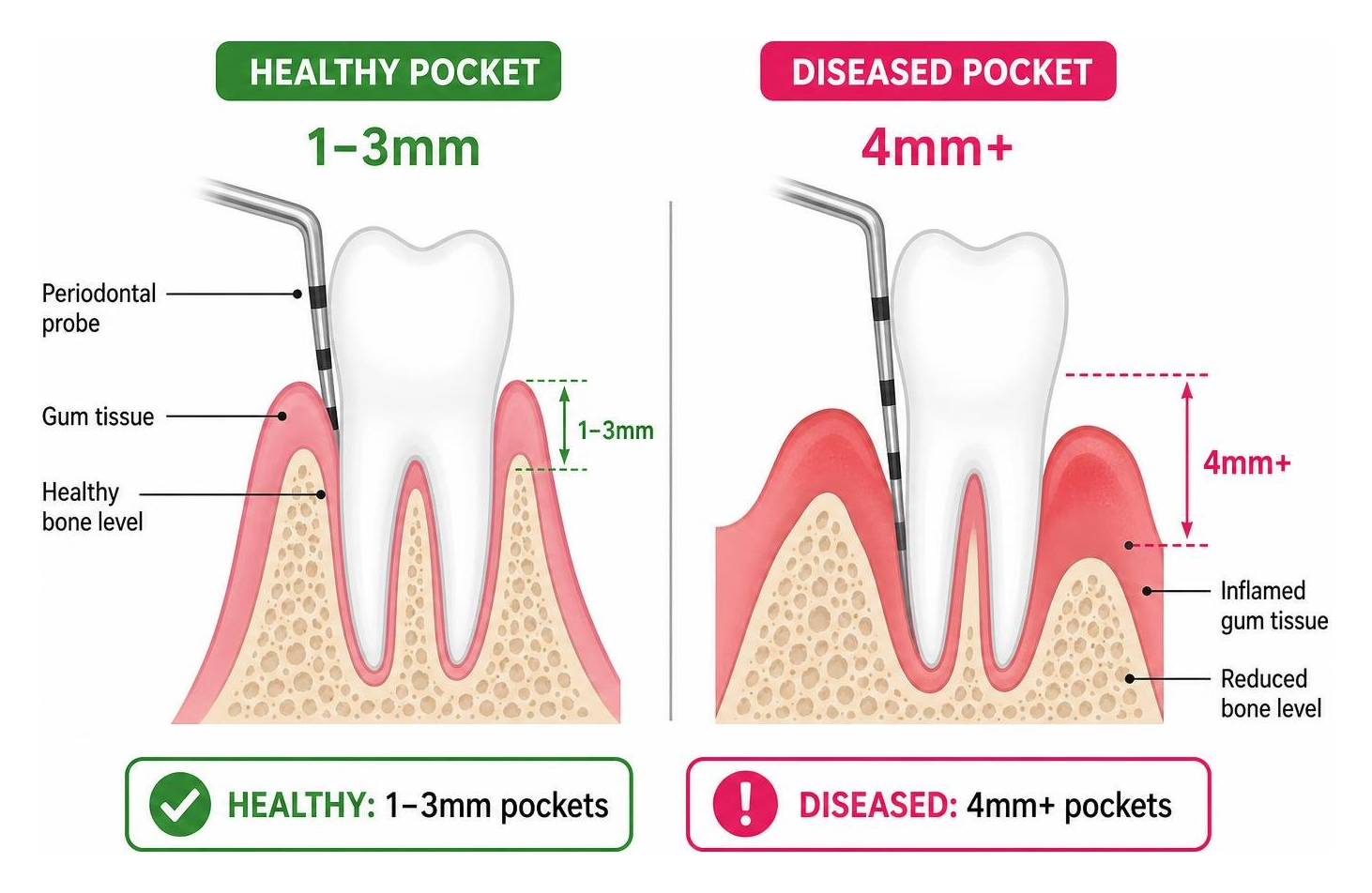
Using a tiny, calibrated instrument called a periodontal probe, we gently measure the depth of the space (the “pocket”) between your tooth and the surrounding gum tissue.
- 1mm to 3mm: Healthy, normal gum tissue.
- 4mm: Early sign of inflammation, indicating the Stages of Gingivitis.
- 5mm or higher: Sign of active periodontitis (advanced gum disease), which may require specialized therapy. If we detect deep pockets, we will discuss a customized treatment plan, which might include an In-Depth Guide to Deep Cleaning Dental Procedure.
Step 3: Clinical Tooth-by-Tooth Inspection
Next, we perform a thorough, tooth-by-tooth physical inspection. We look for soft spots in the enamel that indicate active decay, check the margins of your existing fillings or crowns to make sure they are still sealed, and evaluate your overall bite alignment. We also look for signs of abnormal tooth wear, which often points to nighttime teeth grinding or clenching (bruxism).
Step 4: Oral Cancer Screening and TMJ Assessment
An oral cancer screening is a quick, painless, yet incredibly vital part of every single exam. We visually inspect and physically feel your lips, tongue, roof of the mouth, throat, and the inside of your cheeks for any unusual red or white patches, lumps, or sores. We also feel the lymph nodes in your neck and jawline. When oral cancer is caught early, the five-year survival rate is an impressive 84%, compared to just 39% if it goes undetected until it spreads.
Finally, we assess your Temporomandibular Joint (TMJ). We check for clicking, popping, or tenderness when you open and close your mouth. If you show signs of jaw strain or wear from grinding, we can discuss protective solutions, including What to Expect Before and After Using a TMJ Night Guard.
How Often Do You Need Dental Exams and Cleanings?
The old rule of thumb is that everyone needs to visit the dentist every six months. While that is a fantastic baseline for the majority of patients, oral health is not one-size-fits-all. Your ideal schedule depends entirely on your unique systemic health, genetics, and lifestyle.
| Patient Risk Level | Recommended Exam Frequency | Recommended Cleaning Frequency |
|---|---|---|
| Low Risk (No cavities, healthy gums) | Every 6 to 12 months | Every 6 months |
| Moderate Risk (Occasional cavities, mild gingivitis) | Every 6 months | Every 6 months |
| High Risk (Active gum disease, frequent decay, diabetes, smoking) | Every 3 to 4 months | Every 3 to 4 months |
| Pediatric Patients (Children under 18) | Every 6 months | Every 6 months |
Standard Frequency for Routine Dental Exams
For the average healthy adult and child, a routine dental exam and cleaning every six months is the perfect interval to prevent plaque from hardening into tartar and to catch any emerging issues early.
But when should this routine start? According to clinical guidelines, a child’s very first dental visit should take place by age 1 year, or within six months of when their first baby tooth erupts. Starting early helps children get used to the sights and sounds of the dental office, preventing dental anxiety before it ever has a chance to start. To learn more about setting up your family’s schedule, read our comprehensive guide on How Often Should You Go to the Dentist.
High-Risk Factors Requiring More Frequent Visits
Certain health conditions and lifestyle habits make you much more susceptible to oral infections, decay, and gum disease. If any of the following apply to you, we will likely recommend a customized preventive schedule of every 3 to 4 months:
- Diabetes: Uncontrolled blood sugar makes it harder for your body to fight infections, significantly increasing your risk of severe gum disease.
- Pregnancy: Hormonal fluctuations during pregnancy can cause “pregnancy gingivitis,” making your gums swollen, tender, and prone to bleeding.
- Smoking or Vaping: Tobacco use weakens your body’s ability to fight off gum infections and masks the early warning signs of disease (like bleeding gums) by constricting blood vessels.
- History of Periodontal Disease: Once you have experienced bone loss from gum disease, you require more frequent professional maintenance to keep the bacteria under control.
Frequently Asked Questions About Dental Exams
At AZ Dentist, we love questions! The more you know about your care, the more confident you will feel in the dental chair. Here are some of the most common questions we hear from our patients across Arizona.
Are dental x-rays safe, and how often are they needed?
Yes, modern digital dental X-rays are extremely safe! The amount of radiation exposure from a standard set of digital bitewing X-rays is virtually negligible—roughly equivalent to the natural background radiation you receive from spending a single day outdoors, or taking a short commercial airplane flight.
How often you need them depends on your oral health. If you have a healthy mouth with no history of frequent cavities, we may only need to take X-rays every 2 to 3 years. However, if you are at a higher risk for decay or gum disease, we will recommend them every 6 to 12 months to monitor active areas.
What is the difference between plaque and tartar?
This is a classic question!
- Plaque is a soft, sticky, virtually colorless film of bacteria that constantly forms on your teeth after you eat. Because it is soft, you can easily remove it at home by diligently Brushing Your Teeth twice a day and Flossing daily. It is also highly recommended to How Often Should You Change Your Toothbrush (every 3 to 4 months) to ensure your bristles are strong enough to sweep plaque away.
- Tartar (Calculus) is what happens when plaque is left on the teeth for more than 72 hours. It absorbs minerals from your saliva and calcifies into a rock-hard, yellowish deposit. Once plaque has hardened into tartar, it cannot be removed by brushing or flossing at home. Only a dental professional using specialized scaling instruments can safely remove tartar without damaging your enamel.
How much do dental exams cost, and does insurance cover them?
The total out-of-pocket cost of a dental exam and cleaning can vary depending on whether you require diagnostic X-rays, specialized gum therapy, or a standard cleaning.
The great news is that the vast majority of dental insurance plans treat routine preventive care—including two exams and two cleanings per year—as a priority. This means they are often covered at or near 100% with little to no out-of-pocket cost to you. If you do not have dental insurance, don’t worry! We believe high-quality care should be accessible to everyone, which is why we offer flexible, affordable payment options to keep your smile healthy without breaking the bank.
Conclusion
At the end of the day, dental exams are not just about checking boxes or looking for cavities. They are about building a relationship with a team that genuinely cares about your comfort, your confidence, and your health.
At AZ Dentist, we do things a little differently. We have designed our offices across Glendale, Scottsdale, Sedona, and Sun City to feel warm, relaxing, and entirely free of judgment. Our ultimate goal is for you to “come as a patient, leave as a friend,” while helping you achieve and maintain the “smile of a lifetime.”
If you want to experience the AZ Dentist Difference for yourself, we would love to welcome you into our dental family. Please Contact our friendly team today to ask any questions, or take the first step toward a healthier smile and Schedule a Dental Cleaning and Exam with us. We can’t wait to see you!