

Preventative Dental Care Keeps Small Problems Small
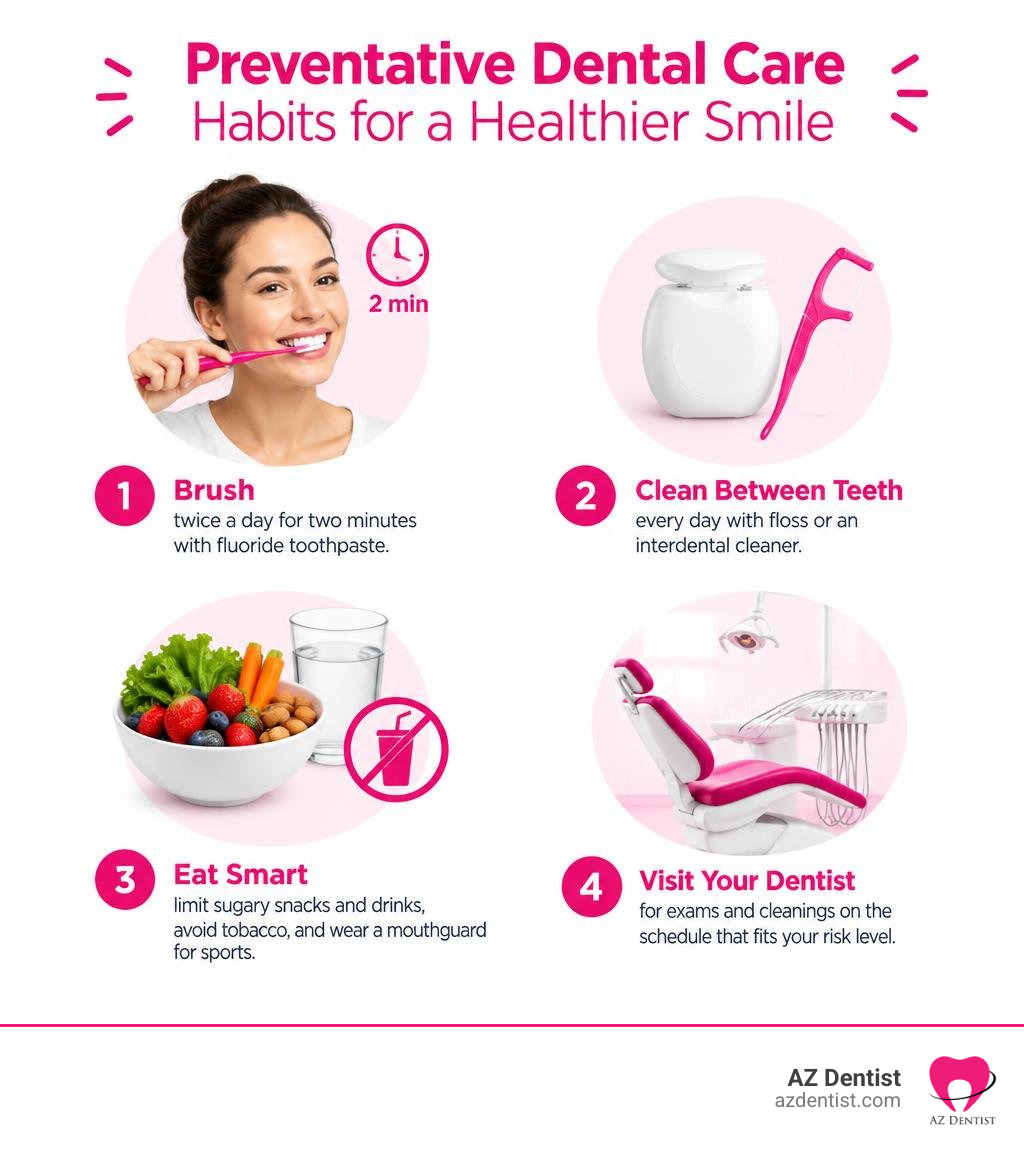
Preventative dental care means daily habits and regular dental visits that help stop cavities, gum disease, enamel wear, and dental injuries before they need major treatment. The basics are simple:
- Brush twice a day for two minutes with fluoride toothpaste.
- Clean between your teeth every day with floss or an interdental cleaner.
- Limit frequent sugary snacks and drinks, avoid tobacco, and wear a mouthguard for sports.
- See your dentist for exams and cleanings on the schedule that fits your risk level.
The goal is not to keep you in the dental chair. It is to help you spend less time there by finding concerns early, when they are often easier to manage. Regular checkups can also spot signs of gum disease, oral cancer, grinding, and changes that may affect your wider health.
I’m Dr. Janne Lynch, and I have practiced dentistry in Manhattan, rural Texas, and Arizona, with experience ranging from oral surgery to cosmetic care. At AZ Dentist Scottsdale, AZ Dentist Glendale, AZ Dentist Sun City, and AZ Dentist Sedona, I use a gentle, personalized approach to Preventative dental care so patients can protect their smiles with confidence.
Simple Preventative dental care word guide:
What Is Preventative Dental Care and Why Does It Matter?
At its core, preventive dentistry is the combination of clinical evaluations and daily oral hygiene routines designed to preserve natural tooth structure and soft tissues. Rather than reacting to toothaches or broken restorations, we focus on intercepting bacterial plaque, mineral loss, and tissue inflammation before they cause irreversible damage.
According to CDC guidelines on routine preventive care, maintaining proactive health appointments is one of the most effective strategies to prevent the onset of chronic diseases. Navigating these appointments is straightforward once you know what happens during a clinical visit. You can review our step by step guide to understanding your dental exam process to see how diagnostics and thorough examinations form the backbone of modern oral wellness.
Core Services in Preventative Dental Care
Professional preventive appointments encompass several evidence-based treatments tailored to reinforce your enamel and protect your gums:
- Diagnostic Radiographs (X-rays): Low-radiation digital imaging allows us to detect interproximal decay (between teeth), bone loss, impacted teeth, and asymptomatic infections beneath the gumline.
- Professional Dental Cleanings (Prophylaxis): Even meticulous brushing cannot eliminate hardened calculus (tartar). Dental hygienists use specialized ultrasonic and hand instruments to scale away mineralized deposits and polish enamel surfaces. For a deeper look at this process, read a practical guide to professional dental cleaning.
- Topical Fluoride Applications: Highly concentrated fluoride varnishes help remineralize weakened enamel, reversing early micro-lesions before they turn into full cavities.
- Pit and Fissure Sealants: Thin, protective resin barriers applied to the chewing surfaces of permanent molars prevent food particles and bacteria from settling into deep grooves.
- Oral Cancer Screenings: A visual and tactile evaluation of the tongue, floor of the mouth, palate, and lymph nodes to detect unusual mucosal lesions or early cellular changes.
How Routine Prevention Protects Overall Health
Your mouth serves as a primary gateway to your entire body. When oral bacteria proliferate unchecked, they cause localized inflammation in the form of gingivitis and periodontitis. Nearly 42% of adults aged 30 and older have some form of periodontitis, with severe periodontitis affecting approximately 8% of the adult population.
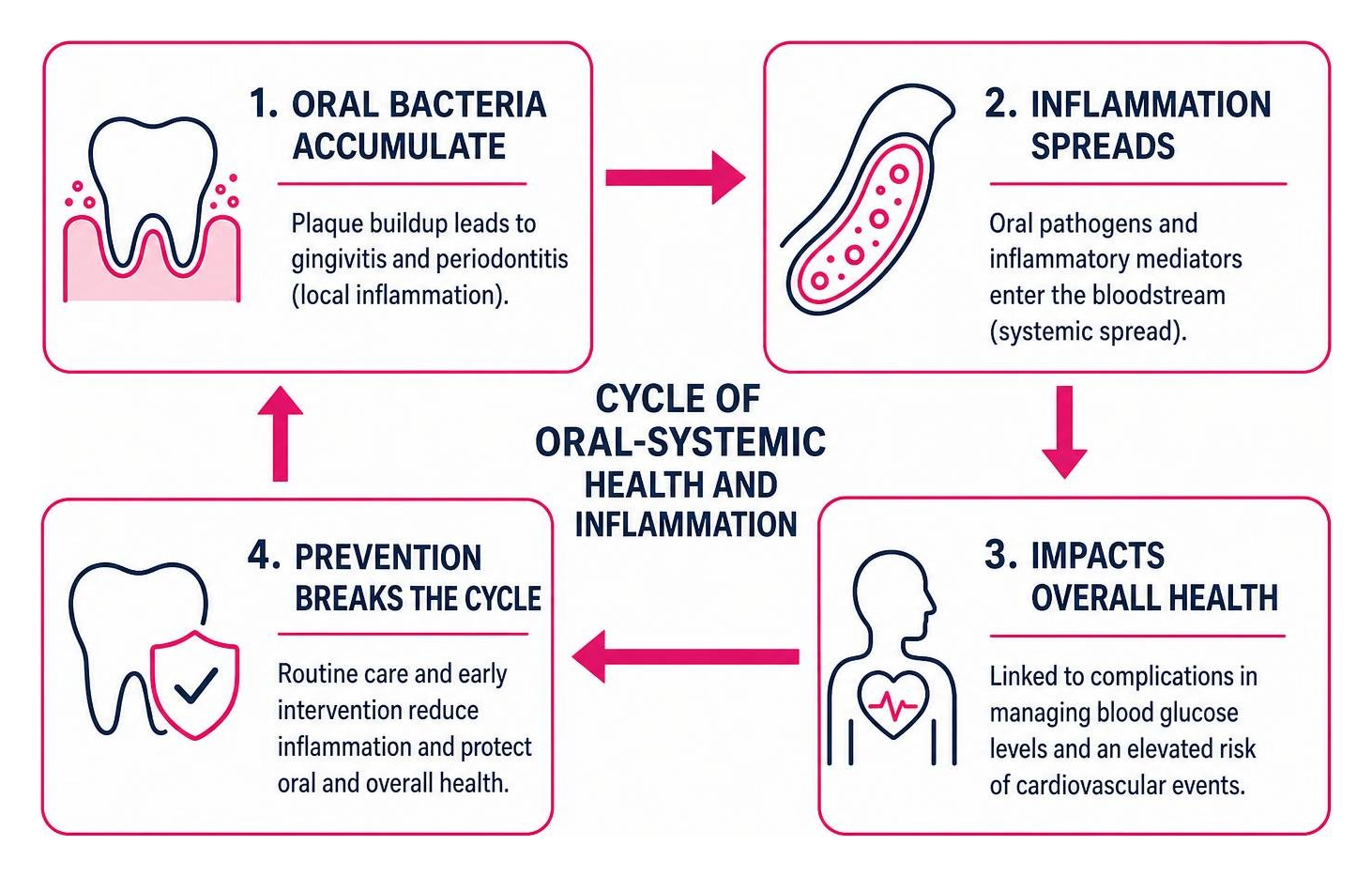
Chronic periodontal infection allows inflammatory mediators and oral pathogens to enter the bloodstream. This systemic spread is linked to complications in managing blood glucose levels in diabetic patients and an elevated risk of cardiovascular events. Keeping your gums healthy through routine cleanings and early intervention reduces this systemic bacterial load. If inflammation has already begun, exploring targeted gum disease treatment options can halt tissue destruction and safeguard your broader physical wellness.
The Economics of Prevention: Spend Less Time and Money in the Dental Chair
There is an old saying in dentistry: “The healthiest tooth is the one that never needs repair.” It is also the most affordable tooth. Routine maintenance yields immense financial returns for individuals, families, and healthcare systems alike. For every single dollar spent on preventive dental care, patients can save between $8 and $50 in future restorative, endodontic, and emergency treatments.
Nationally, untreated oral conditions lead to significant economic loss, with the United States losing over $45 billion in workforce productivity annually due to dental emergencies. Research examining Medicaid-enrolled adults demonstrated that attending at least one preventive dental visit in a prior year was associated with 0.13 fewer nonpreventive visits, $29.12 lower nonpreventive expenditures, and $70.12 lower total annual dental expenditures (Taylor et al., 2022).
Avoiding Costly Restorative and Emergency Procedures
Cavities do not appear overnight; they develop progressively as bacterial acids leach minerals from the enamel, penetrate the softer dentin, and eventually infect the vascular dental pulp.
Catching enamel demineralization early allows for conservative remineralization or small, minimally invasive restorations. Neglecting routine checkups allows decay to advance toward the nerve, often necessitating root canal therapy, full-coverage crowns, or complete tooth extractions. In cases where severe infection leads to tooth loss, patients often turn to specialized procedures to restore function; you can find qualified dental implant specialists near you to rebuild missing teeth, though preventing tooth loss in the first place remains our primary goal.
Similarly, maintaining routine prophylaxis prevents gingivitis from escalating into advanced bone loss. Understanding the ins and outs of prophylaxis vs deep cleaning highlights why staying ahead of calculus accumulation prevents the need for extensive scaling and root planing under local anesthesia.
Maximizing Insurance Coverage and Community Programs
Most dental insurance benefit structures heavily incentivize prevention. Standard plans typically cover routine examinations, biannual cleanings, and diagnostic X-rays at 100% with no deductible required. Utilizing these built-in benefits every calendar year ensures that you maximize the coverage you pay for while preventing conditions that trigger high out-of-pocket costs against your annual maximums.
On a community level, public health preventive measures deliver exceptional economic value:
- Community Water Fluoridation: Adjusting natural fluoride levels in public water supplies saves an estimated $6.5 billion in dental treatment costs across the nation. In communities of 1,000 or more people, water fluoridation delivers a payback of roughly $20 for every $1 invested.
- School-Based Sealant Programs: Delivering dental sealants to approximately 7 million low-income school children could save up to $300 million in restorative dental care costs by shielding vulnerable permanent molars during high-risk childhood years.
- Emergency Department Diversion: Across the country, over 2 million hospital emergency room visits occur each year due to preventable dental pain. Medicaid programs pay nearly $1,000 for each emergency room visit—funds that provide only temporary pain relief or antibiotics without addressing the underlying dental issue.
Your Daily Role: At-Home Preventative Dental Care Habits
Clinical dental visits account for only a few hours of your year; the remaining 8,750+ hours depend on your daily home care. Establishing a consistent, effective oral hygiene routine is essential for disrupting the sticky biofilm known as plaque.
- Brushing Technique: Brush your teeth at least twice daily for two full minutes using a soft-bristled manual or electric toothbrush. Angle the bristles at 45 degrees toward the gumline using gentle, circular motions. Avoid aggressive scrubbing, which can cause mechanical enamel abrasion and gum recession.
- Spit, Don’t Rinse: After brushing with fluoride toothpaste, spit out the excess paste but do not immediately rinse your mouth with water. Leaving a residual trace of fluoride on your teeth allows minerals to strengthen enamel for longer. If you want a brighter smile, check out our comprehensive guide to the best toothpaste for whitening teeth to choose products that lift stains without damaging outer enamel.
- Interdental Cleaning: Plaque between your teeth cannot be reached by toothbrush bristles. Use dental floss, floss picks, or interdental brushes at least once daily before bed to clear out trapped food particles and bacteria.
- Dietary Choices: Frequent consumption of fermentable carbohydrates and acidic beverages feeds plaque bacteria, producing acid spikes that erode enamel. Limit sipping on sodas, sports drinks, and sweetened coffees throughout the day. If you consume acidic food or drink, wait at least 30 to 60 minutes before brushing so your saliva can naturally re-harden softened enamel.
- Protective Appliances and Lifestyle: Wear a custom-fitted sports mouthguard during contact athletics to prevent traumatic fractures and avulsions. If you clench or grind your teeth at night (bruxism), a custom nightguard prevents premature wear, enamel fractures, and jaw joint strain. Finally, quitting tobacco dramatically lowers your risk of periodontal bone loss and oral cancer.
Optimizing Hygiene Routines Across Every Stage of Life
Preventive oral needs shift as we age, requiring tailored strategies from infancy through older adulthood.
For infants and young children, pediatric guidelines recommend establishing a “dental home” when the first baby tooth erupts or by 12 months of age. Clinical frameworks such as the Oral Treatment for Infants, Children, and Adolescents protocol emphasize early caries-risk assessments, anticipatory guidance for parents on bottle-feeding habits, and timely sealant applications on newly erupted six-year and twelve-year molars.
As patients reach their senior years, changes in systemic health and medication use often reduce salivary flow. Decreased saliva significantly increases the risk of rapid root decay and oral infections. Reviewing our resource on everything you need to know about elderly dental care can help seniors and caregivers manage dry mouth, maintain manual dexterity during brushing, and protect exposed root surfaces.
Recommended Frequency for Dental Visits and Checkups
While visiting the dentist every six months is a reliable rule of thumb for many individuals, preventive schedules should be personalized based on your individual caries risk, gum stability, and general health history. When selecting a dental provider, reviewing these 5 ways to know if an arizona general dentist is right for you can help ensure your care team tailors their recall intervals to your unique needs.
| Patient Risk Category | Typical Oral Health Profile | Recommended Recall Interval | Primary Clinical Focus |
|---|---|---|---|
| Low Risk | No active cavities, healthy gum tissue, minimal plaque buildup, good home hygiene | Every 6 to 12 months | Routine cleaning, diagnostic checkup, lifestyle maintenance |
| Moderate Risk | Occasional decay, slight gum inflammation (gingivitis), exposed roots, or orthodontic appliances | Every 4 to 6 months | Topical fluoride varnish, oral hygiene coaching, bite monitoring |
| High Risk | History of recurrent decay, active periodontitis, heavy tobacco use, diabetes, or severe dry mouth | Every 3 to 4 months | Periodontal maintenance scaling, pocket depth tracking, high-strength prescription fluoride |
Frequently Asked Questions About Preventative Dental Care
Are dental fillings considered part of preventive dental care?
No. Fillings are categorized as basic restorative services rather than preventive care. While a filling stops an existing cavity from expanding deeper into a tooth, it treats active damage that has already occurred. True preventive services focus on stopping the bacterial infection and demineralization process before permanent structural enamel loss occurs.
How often should children receive preventive fluoride treatments and sealants?
Professional topical fluoride varnish is generally recommended every three to six months for children, depending on their individual cavity risk score. Pit and fissure sealants should be placed on permanent molars as soon as they fully erupt through the gumline—typically around age 6 for first molars and age 12 for second molars.
Does dental insurance fully cover routine preventive visits?
Most standard dental insurance policies cover 100% of preventive services—including semi-annual exams, regular cleanings, and routine bitewing X-rays—meaning patients usually pay zero out-of-pocket costs or deductibles for these appointments. However, frequency limits apply (such as exactly two cleanings per 12-month period), so it is best to confirm your specific plan terms.
Conclusion
Prioritizing preventative dental care is the most reliable way to protect your natural teeth, maintain vibrant overall health, and keep treatment costs minimal over your lifetime. By pairing consistent daily hygiene habits at home with routine, risk-adjusted professional visits, you can preserve your smile comfortably and spend far less time undergoing complex dental procedures.
At AZ Dentist, our goal is to help you build a healthy foundation so you can “come as a patient, leave as a friend” and enjoy the smile of a lifetime. Whether you live in Maricopa or Yavapai County, our teams are ready to support your long-term wellness. Schedule a routine checkup at AZ Dentist Scottsdale, AZ Dentist Glendale, AZ Dentist Sun City, or AZ Dentist Sedona today to keep your smile bright, healthy, and problem-free.
References
Taylor HL, Sen B, Holmes AM, Schleyer T, Menachemi N, Blackburn J. “Does preventive dental care reduce nonpreventive dental visits and expenditures among Medicaid-enrolled adults?.” Health services research, 2022. PMCID PMC9643079.