
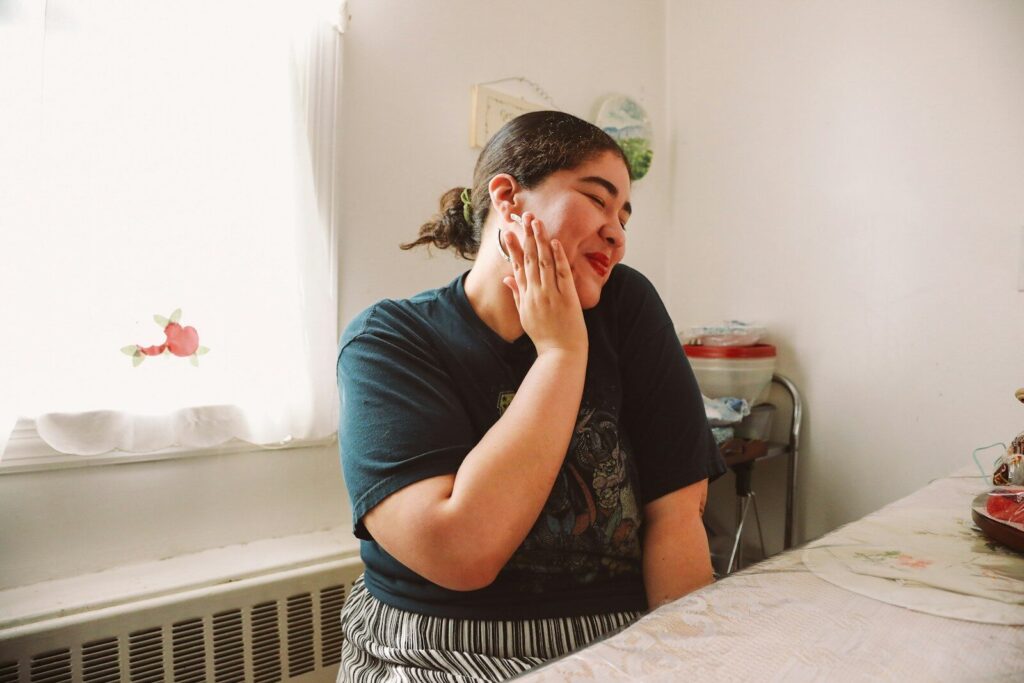
When your tooth hurts when biting down, your body is handing you a very specific clue, and here in Glendale I hear it described the same way almost every week: “It’s fine until I chew, Dr. Lynch, and then it zings.” I’m Dr. Janne Lynch, and at our Glendale office on Bell Road, bite pain is one of the most common reasons patients finally pick up the phone, usually after days of carefully chewing on one side and hoping it sorts itself out. Here’s the honest truth from my chair: pain on biting almost always has a findable, fixable cause, and the list of usual suspects is short. So let’s go through the eight causes I see most, what each one feels like, and, most importantly, when it’s time to stop chewing around the problem and call us.
One reassurance before the list: needing to come in is not a failure. Teeth don’t read self-help articles. You are never bothering us by calling, and I’d always rather check a false alarm than meet an infection a week late.
The 8 Most Common Causes of Pain When You Bite
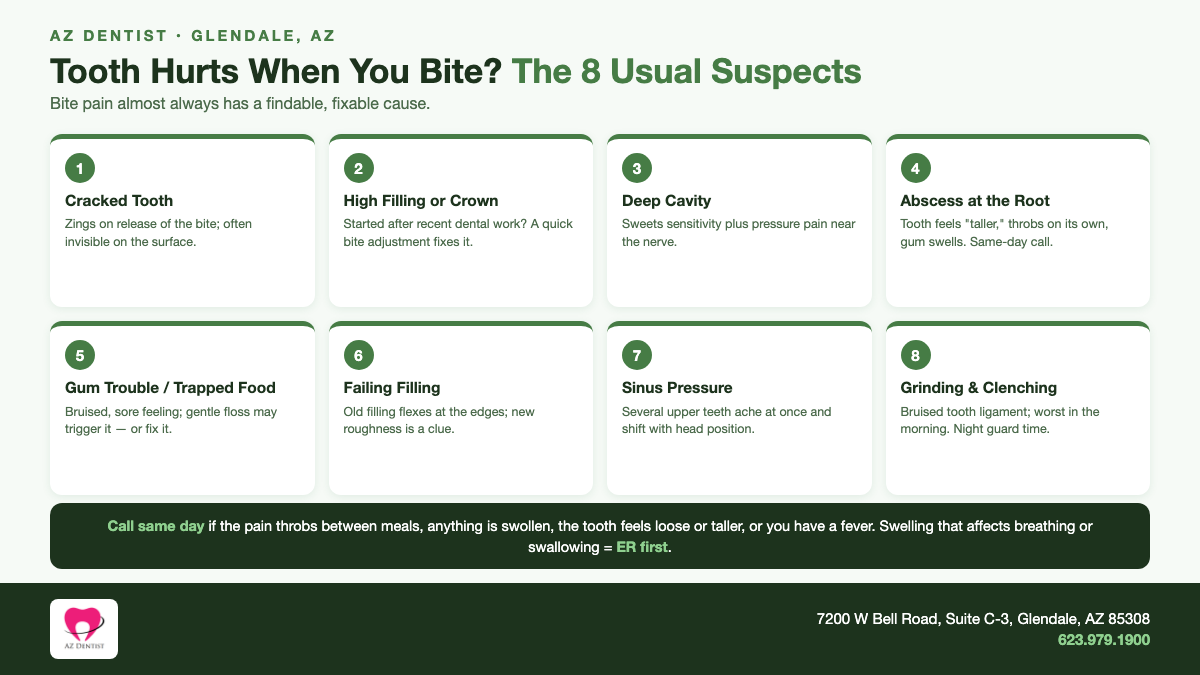
1. A Cracked Tooth (the Sneakiest Culprit)
When a tooth hurts when biting down, a crack is my first suspect, and it comes with a signature move: often the sharpest pain isn’t on the bite itself, but when you release the bite. The crack flexes open under pressure, then snaps shut, and that rebound is the zing. Cracks are often invisible on the surface and can even hide from X-rays, which is why “my dentist couldn’t see anything” doesn’t always mean “nothing’s there.” Molars with large, older fillings are the most common crackers, and ice chewers, I’m looking at you with love. Caught early, a crack often needs just a crown to hold the tooth together; our Glendale dental crowns team handles these constantly. Ignored, a crack can travel into the root, and then the conversation gets harder.
2. A Filling or Crown That Sits Too High
If your tooth started hurting right after recent dental work, this is the first thing I’d check. A filling or crown that sits even a fraction of a millimeter too tall takes the full force of your bite before any other tooth touches, and the ligament around it gets bruised and loud about it. The fix is wonderfully anticlimactic: a few seconds of polishing to adjust the bite, and relief usually follows within days. Please don’t tough this one out; it’s the easiest fix on this whole list.
3. A Deep Cavity
A cavity that has worked its way close to the nerve can make chewing miserable, especially when food packs into the hole and presses on it. The tip-off is often sensitivity to sweets along with the bite pain. Decay never gets smaller on its own, but caught at this stage it’s frequently still a filling rather than something bigger, which is exactly why I’d rather see you this week than this quarter.
4. An Abscess or Infection at the Root
When a tooth hurts when biting down and also feels “taller” than its neighbors, or throbs on its own, or the gum nearby is swollen or has a little pimple on it, infection moves to the top of my list. An abscessed tooth is pressure in a closed space, and chewing squeezes it. This one is not a wait-and-see situation: dental infections can spread, and the tooth usually needs a root canal to clean out the infection and save it. If you have facial swelling or fever along with bite pain, call us the same day, and if swelling ever affects your breathing or swallowing, that’s a 911 or ER situation first.
Chewing on one side for a week? Glendale, let’s find the cause — we hold same-day time for painful teeth.
AZ Dentist Glendale — 7200 W Bell Road, Suite C-3, Glendale, AZ 85308
Call us directly: 623.979.1900
5. Gum Trouble or Food Packed Between Teeth
Sometimes the tooth is innocent and the gum is the problem. A popcorn hull wedged under the gumline, a seed lodged between molars, or early gum disease around one tooth can all make biting hurt in a way that feels exactly like a tooth problem. The clue: the pain is often more of a sore, bruised feeling, and flossing the area may trigger it, or fix it. Try gentle floss, never anything sharp. If the soreness lasts more than a day or two or the gum swells, we should look, because a gum abscess needs the same respect as a tooth abscess.
6. A Loose, Cracked, or Failing Filling
Fillings work hard for years, and eventually some let go at the edges. When a filling no longer seals, biting can flex it slightly against the tooth, and that movement hurts. You might also notice a new roughness with your tongue, or find a mysterious hard crumb in a mouthful of soft food. When an older tooth hurts when biting down and that filling has been in place for a decade or more, a worn-out edge is one of my first suspects. Related: a chipped tooth with a missing corner can ache on pressure, too. Replacing a worn filling is routine; waiting until the tooth underneath decays is what turns routine into a root canal.
7. Sinus Pressure Masquerading as Tooth Pain
Here’s one that surprises people every cold-and-allergy season. The roots of your upper back teeth sit just beneath your sinuses, and when sinuses are inflamed, those teeth can ache when you bite or when you bend over to tie your shoes. The tip-offs: several upper teeth hurt at once rather than one, and the pain shifts with head position. If this pattern matches a current cold or Glendale’s spring dust-and-pollen special, the teeth may be fine, but when in doubt, let us confirm it rather than assume, because a genuinely infected upper molar can impersonate sinus pain just as convincingly.
8. Grinding, Clenching, and a Bruised Ligament
Every tooth sits in a tiny hammock of ligament fibers, and like any ligament, it can get sprained. Night grinding and daytime clenching, both of which rise with stress, can leave one or several teeth tender to biting, often worst in the morning. If you wake with a tired jaw, headaches at your temples, or a partner’s reports of nighttime squeaking, grinding belongs on your suspect list. A custom night guard is usually the fix, and it’s far cheaper than the cracked tooth that unchecked grinding eventually produces (see culprit number one).
When a Tooth Hurts When Biting Down: Emergency or Routine Visit?
Here’s my simple triage for Glendale patients. Call us the same day when the tooth hurts when biting down and any of these are true: the pain throbs on its own between meals, anything is swollen, the tooth feels loose or taller than its neighbors, you have a fever, or the pain woke you up at night. As a Glendale emergency dentist, we keep same-day room in the schedule for exactly these calls.
If it’s a twinge only with pressure, no swelling, no night pain, you can usually book the next available appointment, within days, not weeks. What I’d steer you away from is the third option so many people choose: adapting. Chewing on one side for a month doesn’t fix anything; it just overworks the other side while the real problem matures quietly. A tooth that hurts when biting down is asking for an exam, not a workaround.
In the meantime: stick to softer foods, skip very hot and icy things, rinse with warm salt water, and use over-the-counter pain relief as directed on the label, checking with your physician or pharmacist if you take other medications. And please, no aspirin placed against the gum; it burns the tissue and helps nothing.
Not sure if your bite pain can wait? Call and describe it — we’ll tell you honestly. No judgment, ever.
AZ Dentist Glendale — 7200 W Bell Road, Suite C-3, Glendale, AZ 85308
Direct line: 623.979.1900 | Main line: (602) 638-2539
How We Find the Cause at Our Glendale Office
Figuring out why a tooth hurts when biting down is detective work, and it’s some of my favorite dentistry. At your visit we’ll listen first, because when it hurts (biting down, releasing, cold, sweets, mornings) narrows the list faster than any gadget. Then we look: an exam, an X-ray, a bite test where you chew on a little plastic stick one cusp at a time, and sometimes a light through the tooth to reveal a hiding crack. Most of the time, we have an answer within one visit, and we’ll show you exactly what we found before we talk treatment.
Then you get options, with honest prices, before anything happens. Sometimes the fix is a two-minute bite adjustment. Sometimes it’s a filling or crown. When the nerve is involved, modern root canal treatment is far gentler than its reputation; the American Dental Association’s patient page on root canals is a good myth-buster if the phrase alone makes you nervous. And if anxiety is the real thing standing between you and relief, tell us. I spent years as a dental-phobic patient myself before I ever held a mirror and explorer, and our whole Glendale team is built around going at your pace. Come as a patient, leave as a friend.
Frequently Asked Questions
Why does my tooth hurt when biting down but not any other time?
Pressure-only pain usually points to a mechanical cause: a crack that flexes under load, a high filling, a failing restoration, or a bruised ligament from grinding. It’s actually a useful clue, because it tends to rule out some other causes. Don’t let “it only hurts sometimes” talk you out of an exam, though; cracks in particular start as sometimes and graduate to always.
My tooth hurts when biting down — can it heal on its own?
A bruised ligament from a one-time bite on a surprise olive pit often settles within a week or two. Nearly everything else on this list, cracks, decay, failing fillings, infection, tends to progress rather than heal, because enamel can’t repair itself the way skin can. My rule of thumb: bite pain that lasts more than a few days, or that’s getting worse, has earned an exam.
How quickly can I be seen for bite pain in Glendale?
We hold same-day time at our Glendale office for painful teeth, and throbbing, swelling, or fever moves you to the front of the line. Call 623.979.1900 as early in the day as you can, describe exactly when the tooth hurts, and our team will tell you when to come in and how to stay comfortable until then.
Does pain on biting always mean I need a root canal?
No, and I want to push back on that fear directly, because it keeps people from calling. Of the eight causes above, only deep decay and infection typically lead to root canal treatment. High fillings, food packing, sinus pressure, gum irritation, and ligament bruising need much simpler care, and even many cracks are solved with a crown alone. The earlier you come in, the more likely the simple fix is still on the table.
The Bottom Line for Glendale Smiles
When a tooth hurts when biting down, it’s rarely a mystery for long; the cause is almost always one of the eight suspects above, and every one of them is more fixable this week than next month. So stop chewing around it. Call our Glendale team, tell us exactly when it zings, and let’s get you back to biting into dinner without a strategy session first.
— Janne Lynch, DDS, practices at AZ Dentist’s Glendale, Scottsdale, Sedona, and Sun City offices. Connect with her on LinkedIn.
This article is educational and isn’t dental advice. Every mouth is different, so please contact us or your own provider for guidance about your specific situation, and seek emergency medical care for any swelling that affects breathing or swallowing.
Glendale, your bite shouldn’t come with a warning label.
AZ Dentist Glendale — 7200 W Bell Road, Suite C-3, Glendale, AZ 85308
Call: 623.979.1900