

Understanding Dental Implants: How They Work and What They Are
Dental implants are the gold standard for replacing missing teeth — and if you’re weighing your options, here’s what you need to know at a glance:
Quick Answer: What Are Dental Implants?
| Feature | Details |
|---|---|
| What they are | Titanium or ceramic posts surgically placed into the jawbone to replace tooth roots |
| Main components | Implant post, abutment (connector), and crown or restoration |
| Success rate | Above 97% over 10 years |
| How long they last | The post can last a lifetime; crowns typically last ~15 years |
| Best for | Single missing teeth, multiple teeth, or full-arch replacement |
| Key benefit | Preserves jawbone and looks, feels, and functions like a natural tooth |
| Recovery time | 3 to 9 months for full bone fusion (osseointegration) |
Missing a tooth affects more than your smile. It changes how you chew, how you speak, and over time, it can cause your jawbone to shrink — which leads to that sunken facial appearance many people don’t expect.
The good news? In July 2026, restorative dentistry has advanced to the point where most people are strong candidates for implants — even those who were told “no” years ago due to bone loss or certain health conditions.
This guide walks you through everything: how implants work, how they compare to bridges and dentures, what the surgical process looks like, and how to make them affordable.
I’m Dr. Janne Lynch, and at AZ Dentist Scottsdale, AZ Dentist Glendale, AZ Dentist Sun City, and AZ Dentist Sedona, I’ve spent nearly two decades helping patients find the right dental implant solution — combining surgical experience from my time treating underserved patients in rural Texas with advanced cosmetic training from NYU’s Larry Rosenthal Institute for Aesthetic Dentistry. With that background, I’ll make sure everything in this guide is practical, honest, and easy to act on.
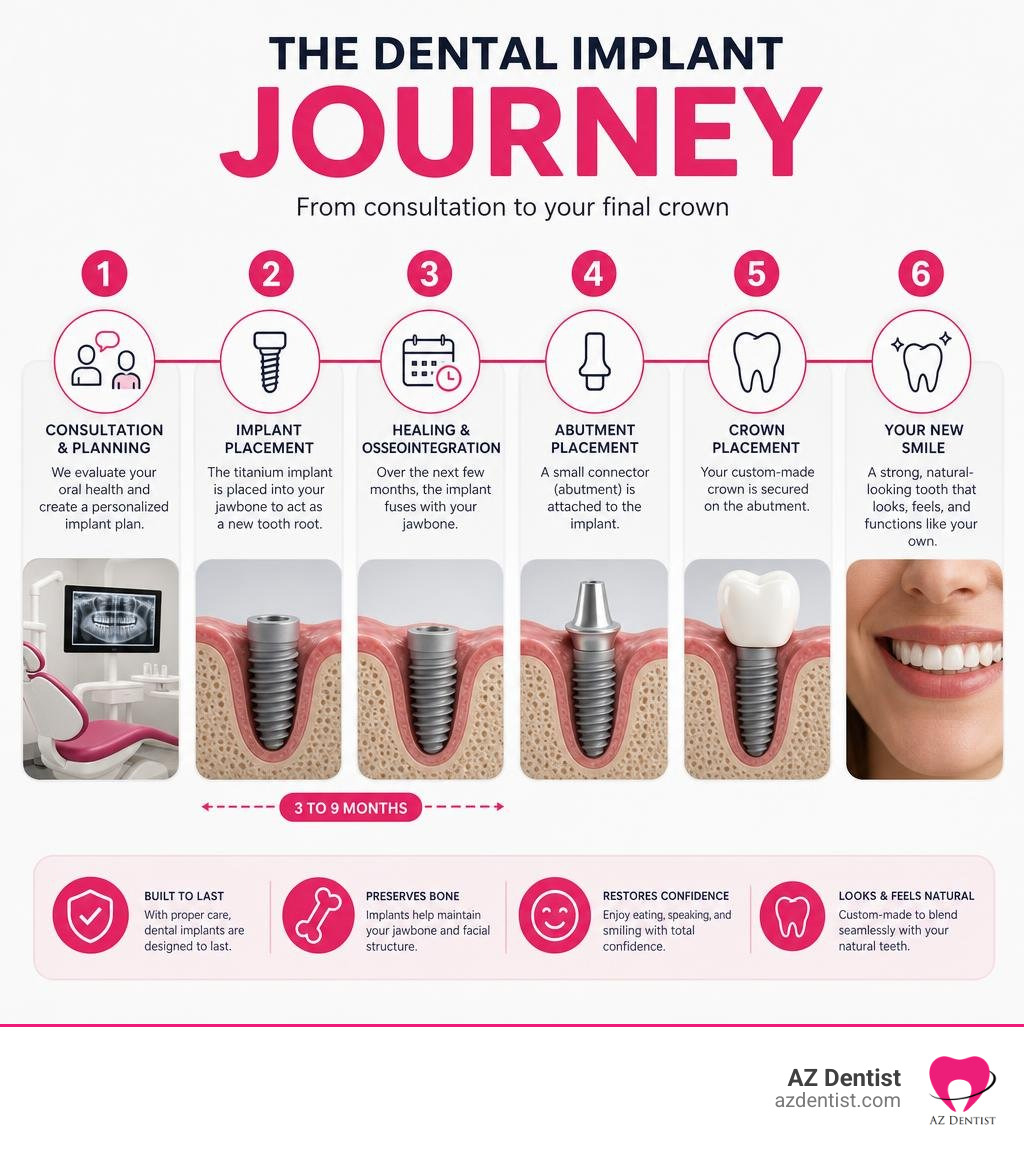
To truly understand why dental implants have revolutionized modern restorative dentistry, we have to look beneath the surface. Traditional tooth replacement options, like standard dentures or partial bridges, only sit on top of your gums. They do nothing to address what is happening inside your jawbone.
When you lose a tooth, you also lose the tooth root. The root does more than just anchor the tooth in place; it constantly transmits the physical forces of chewing directly into the jawbone. This mechanical stimulation signals your body to keep sending calcium and nutrients to maintain that bone density. Without it, the bone begins to resorb, or shrink away. This is why long-term denture wearers often experience a changing facial shape and a sunken appearance over time.
Dental implants solve this problem entirely because they function as artificial tooth roots. By surgically anchoring a bioinert post directly into your jaw, we restore that vital stimulation. This preservation of your natural bone structure is why implants are widely recognized as the single most effective, long-term solution for missing teeth. You can read more about this biological miracle on the FDA’s official guide to dental implants or explore our detailed breakdown on How Do Dental Implants Work.
Key Components of Dental Implants
A complete dental implant system is not a single, solid piece. Instead, it is a highly sophisticated medical device comprised of three distinct parts that work together seamlessly:
- The Implant Body (or Post): This is the screw-like portion that is surgically placed into your jawbone. It is typically made of medical-grade titanium or zirconium oxide. This component acts as your new tooth root.
- The Abutment: This is a small connector piece that screws directly into the implant body. It sits right at or slightly above the gumline, serving as the bridge between the hidden implant post and your visible replacement tooth.
- The Restoration (or Crown): This is the custom-made, highly aesthetic porcelain or ceramic tooth that we attach to the abutment. It is designed to match the exact shade, shape, and contour of your surrounding natural teeth.
Whether you are replacing one tooth or several, this three-part architecture ensures maximum stability and allows for easy maintenance over time. If you are interested in a single-tooth restoration, check out Your Guide to Single Tooth Implants: What to Expect from Quality and Modern Solutions for an in-depth look at what to expect.
The Biological Process of Osseointegration
The magic that makes a dental implant feel as strong as a natural tooth is a biological process called osseointegration. Discovered serendipitously in the mid-20th century, osseointegration is the direct, structural, and functional connection between living bone tissue and the surface of a synthetic implant.
Because titanium and zirconia are highly biocompatible, your body does not recognize them as foreign objects. Instead, during the healing phase—which typically takes anywhere from 3 to 9 months—your jawbone actually grows directly into and around the microscopic ridges of the implant post. Once this process is complete, the implant is literally locked into your skeletal structure.
Clinical data outlined in the StatPearls – NCBI Bookshelf database highlights that titanium implants boast a success rate above 97% over a 10-year period, with a 10-year survival rate of nearly 99%. To achieve these remarkable numbers, we must allow the bone to heal fully before placing the final crown, ensuring a foundation that can withstand a lifetime of daily chewing forces.
Comparing Your Tooth Replacement Options and Materials
When you are looking to replace missing teeth, you generally have three primary paths to choose from: dental implants, traditional dental bridges, or removable dentures. While implants are the most advanced option, understanding how they stack up against the alternatives is essential for making an informed decision.
Here is a quick comparison table to help you visualize the differences:
| Feature | Dental Implants | Traditional Dental Bridges | Removable Dentures |
|---|---|---|---|
| Surgical Required? | Yes | No | No |
| Protects Adjacent Teeth? | Yes (standalone solution) | No (requires shaving down healthy teeth) | Yes (but can cause wear from clasps) |
| Prevents Bone Loss? | Yes | No | No |
| Biting Force Restored | Up to 99% | Moderate (~50-70%) | Low (~20-40%) |
| Average Lifespan | Lifetime (post), 15+ years (crown) | 10 to 15 years | 7 to 10 years |
| Removable? | No | No | Yes |
While bridges and dentures have served patients well for decades, they come with compromises. Traditional bridges require us to shave down and crown the healthy, intact teeth on either side of the gap to support the artificial tooth. Removable dentures can slip, click, and limit the types of food you can comfortably enjoy. If you want a deep dive into all your choices, check out our guide on the different Types of Dental Implants.
Titanium vs. Zirconia Dental Implants
The two primary biocompatible materials used in modern implant dentistry are titanium and zirconia (zirconium oxide). Both offer fantastic durability, but they cater to different patient needs:
- Titanium Implants: The industry standard for over 50 years. Titanium is incredibly strong, highly resistant to corrosion, and has the longest track record of clinical success. It is highly versatile and comes in a two-piece design, making it easier to adjust the angle of the final tooth.
- Zirconia Implants: A newer, metal-free ceramic alternative. Zirconia is highly aesthetic, especially for patients with thin or receding gums where dark metal might otherwise peek through. It is also an excellent option for individuals with metal allergies or sensitivities. Zirconia implants are often crafted as a single piece, which requires precise surgical placement. You can explore this modern, metal-free option further on our Services Zirconia Implants page.
Single Tooth, Bridges, and Full-Arch Restorations
One of the best things about dental implants is their versatility. We can customize the restoration to fit your exact pattern of tooth loss:
- Single Tooth Replacement: A single implant body topped with a custom porcelain crown. It is a “one-tooth solution to a one-tooth problem,” leaving neighboring teeth completely untouched.
- Implant-Supported Bridges: If you are missing several teeth in a row, we can place two or more implants to anchor a bridge, closing the gap without relying on your natural teeth for support.
- Full-Arch Restorations (All-on-4): If you are missing all of your teeth on the upper or lower jaw, we can secure a full, permanent arch of lifelike teeth using just four to six strategically placed implants. This is a game-changer for denture wearers looking to regain their confidence and chew normally again. Learn more about this life-changing technique by reading about All on 4 Dental Implants or exploring our options for Implant Supported Dentures.
The Step-by-Step Surgical Process
The thought of dental surgery can be intimidating, but understanding the steps involved often demystifies the process and alleviates anxiety. At AZ Dentist, we use fully guided surgical techniques. This means we utilize advanced digital imaging to map out your exact anatomy before we ever begin, ensuring highly predictable and minimally invasive placements.
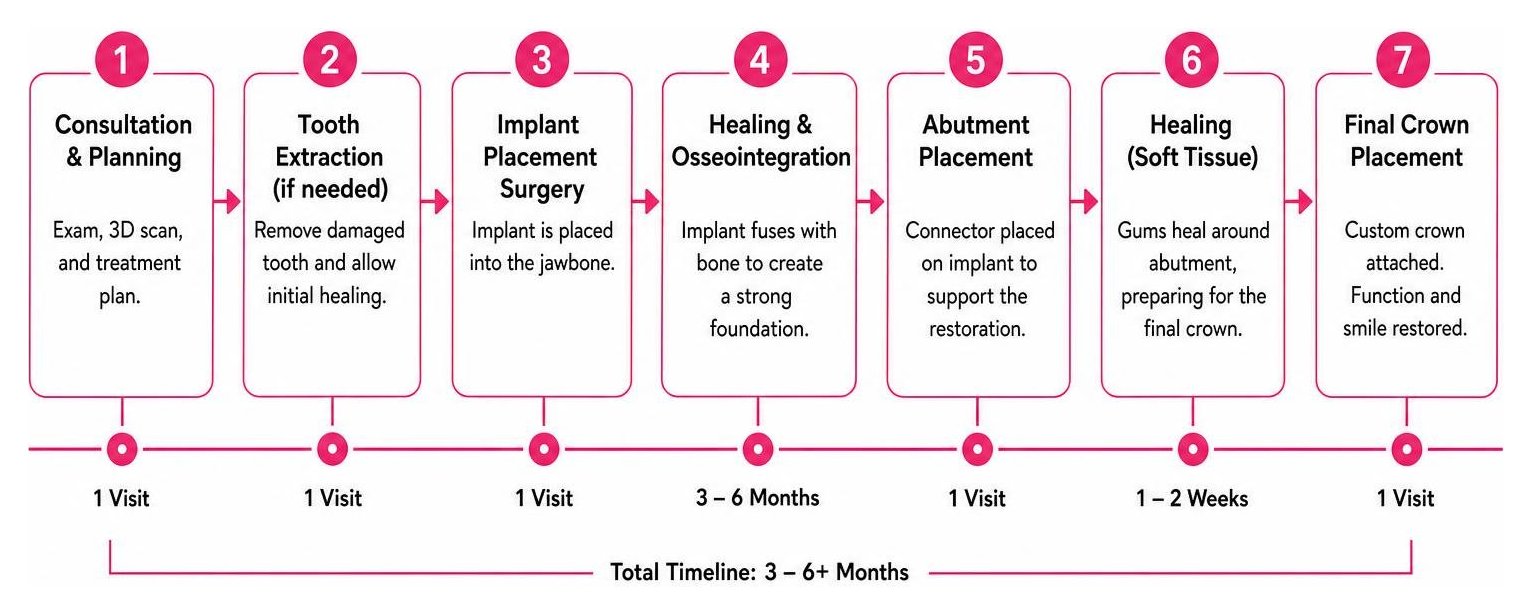
To help you visualize the overall timeline, here is a step-by-step diagram of the entire process:
For a detailed clinical overview of the surgical steps, you can also consult the Mayo Clinic’s guide to dental implant surgery or read our patient-focused Dental Implant Recovery FAQs.
Initial Consultation and Bone Grafting
Your journey begins with a comprehensive consultation. We will take a 3D Cone Beam Computed Tomography (CBCT) scan of your mouth to evaluate your bone density, sinus locations, and nerve pathways.
If you have been missing teeth for a while, your jawbone may have thinned. In these cases, we may need to perform a bone graft to rebuild a solid foundation. This can include procedures like a sinus lift (adding bone near your upper molars) or a ridge augmentation. Sometimes, if the bone loss is minimal, we can perform a minor bone graft on the same day as your implant placement. You can learn more about how jawbone density affects your candidacy in this Harvard Health article on dental implants.
Surgical Placement and Healing Timeline
On the day of your surgery, we prioritize your comfort. We offer local anesthesia to completely numb the area, alongside various sedation options for anxious patients.
Once you are comfortable, we make a small incision in the gum, prepare the bone, and gently insert the implant post. We then close the gum tissue over the implant to protect it while it heals.
The healing phase—during which osseointegration occurs—typically lasts between 3 to 9 months. During this time, you aren’t left toothless; we can provide a temporary cosmetic restoration so you can smile and speak confidently while your bone fuses with the post. To understand how this temporary phase transitions into a permanent smile, explore How Long Do Dental Implants Last.
Comparing Treatment Costs and Financing
When considering dental implants, it is helpful to view them as a long-term investment in your health and quality of life rather than a short-term dental expense. While the upfront investment is higher than that of traditional bridges or dentures, implants are designed to last a lifetime, whereas alternative solutions typically require replacement every 5 to 15 years.
Several variables influence the overall cost of your treatment plan:
- The number of implants required
- The material selected (titanium vs. zirconia)
- The need for preparatory procedures (such as tooth extractions or bone grafting)
- The type of final restoration (single crown, bridge, or full-arch bridge)
- The complexity of your specific oral anatomy
For a thorough look at how these factors combine, check out our Dental Implants Cost Complete Guide or read our Ultimate Guide to Dental Implant Cost Comparison.
Average Cost Breakdown in Arizona
In the Phoenix metropolitan area, including Scottsdale, Glendale, Sedona, and Sun City, implant pricing varies based on the custom nature of the treatment. A single-tooth replacement involves the surgical placement of the post, the custom abutment, and the final porcelain crown.
If you require a full-mouth restoration, such as an All-on-4 system, the total investment reflects the placement of multiple implant posts and a fully customized, high-strength prosthetic arch. Because we believe in keeping care accessible, we offer several tiers of implant systems to fit different budgets. You can read more about finding affordable full-arch options in our guide on Full Mouth Dental Implants Cost Cheapest Near Me.
Insurance, Financing, and Affordable Solutions
Many patients are surprised to learn that while dental insurance historically excluded dental implants, many modern plans now offer partial coverage for the restorative crown or diagnostic imaging.
To bridge the gap, we offer flexible, in-house payment options and partner with trusted third-party healthcare financing companies like CareCredit and Proceed Finance. These services offer low-interest and interest-free payment terms, making it easy to fit your treatment into a comfortable monthly budget. Discover more about managing your investment by reading A Practical Guide to Cheapest Dental Implants.
Frequently Asked Questions
Who is a good candidate for this procedure?
An ideal candidate is anyone in good general health who has fully matured jawbone structure (typically age 18 or older), healthy gum tissues free of active periodontal disease, and adequate bone density to support the implant post.
Even if you have chronic health conditions like controlled type 2 diabetes or autoimmune diseases, you can still be an excellent candidate. Recent clinical studies show that patients with well-managed systemic conditions have implant success rates comparable to those of the general population. We will carefully review your medical history during your consultation. You can read more about candidate criteria in our Dental Implants Scottsdale Guide.
How long does the recovery process take?
The initial recovery period immediately following the implant surgery is surprisingly quick. Most patients experience only mild swelling and minor discomfort for about 3 to 7 days, which is easily managed with over-the-counter pain relievers.
The deeper biological healing phase—where the bone fuses to the implant body—takes between 3 to 9 months. During the first couple of weeks, we recommend sticking to a soft-food diet and avoiding chewing directly on the surgical site to ensure optimal healing. For more detailed recovery tips, check out our Dental Implant Recovery FAQs.
What are the main risks and failure symptoms?
While dental implants have an incredibly high success rate, risks do exist. The primary risk is a condition called peri-implantitis, which is an infection of the gum tissue and bone surrounding the implant, similar to gum disease.
Smoking or vaping can significantly increase this risk by restricting blood flow to the gums and delaying the osseointegration process. Key symptoms of implant failure or infection include a loose or shifting implant, persistent pain, severe swelling, or bleeding gums around the site. If you notice any of these warning signs, it is crucial to contact us immediately. Learn more about protecting your investment by reading about Dental Implant Failure Symptoms.
Conclusion
At AZ Dentist, we believe that everyone deserves to smile with absolute confidence and enjoy their favorite foods without hesitation. Whether you visit us in Scottsdale, Glendale, Sun City, Sedona, or Phoenix, our team is dedicated to providing compassionate, high-quality, and affordable implant dentistry in a warm, judgment-free environment.
I’m Dr. Janne Lynch, and along with our entire skilled team, we are here to guide you through every step of your journey toward achieving the “smile of a lifetime.” If you are ready to explore your options and take the first step toward a healthier, more beautiful smile, we invite you to schedule a consultation with us today. For more info about dental implant services, please visit our service page or reach out to our friendly team.